Anghiari by Giacomo Moor
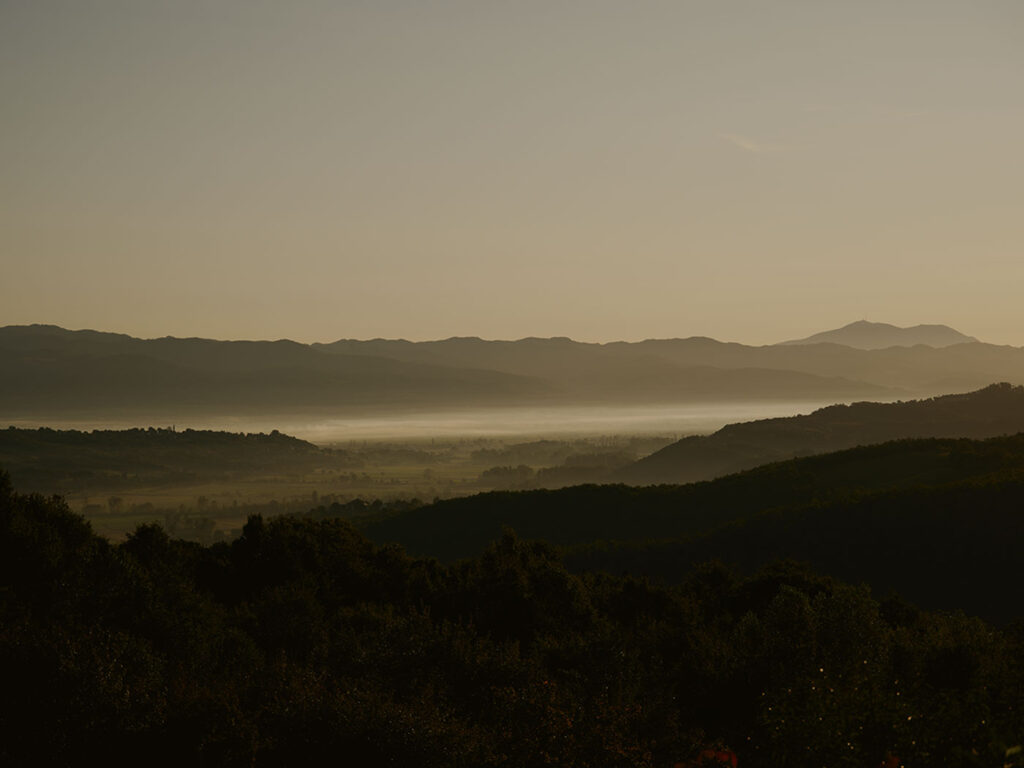
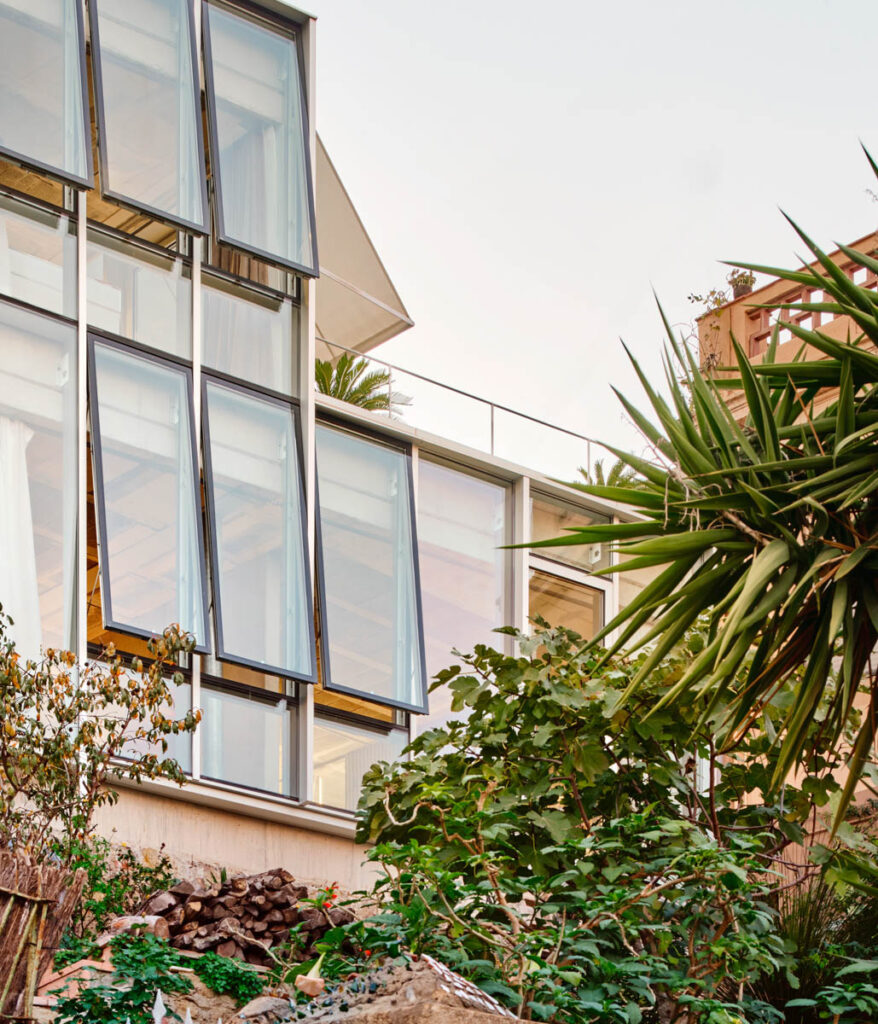
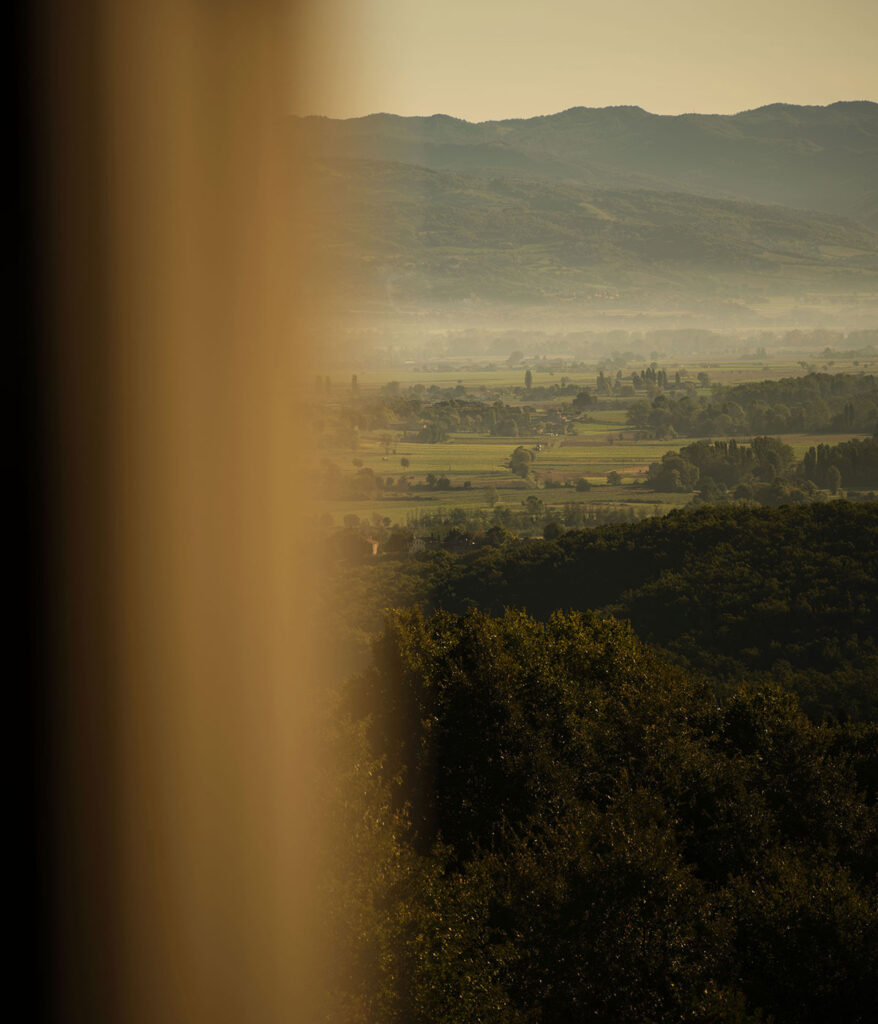
In the hills of the Tuscan Val Tiberina, an ancient farmhouse unfolds across four staggered levels, following the natural slope of the land. Built in different phases, with origins dating back to the 14th century, the house has been restored through a conservation-driven approach that preserves its layered identity.
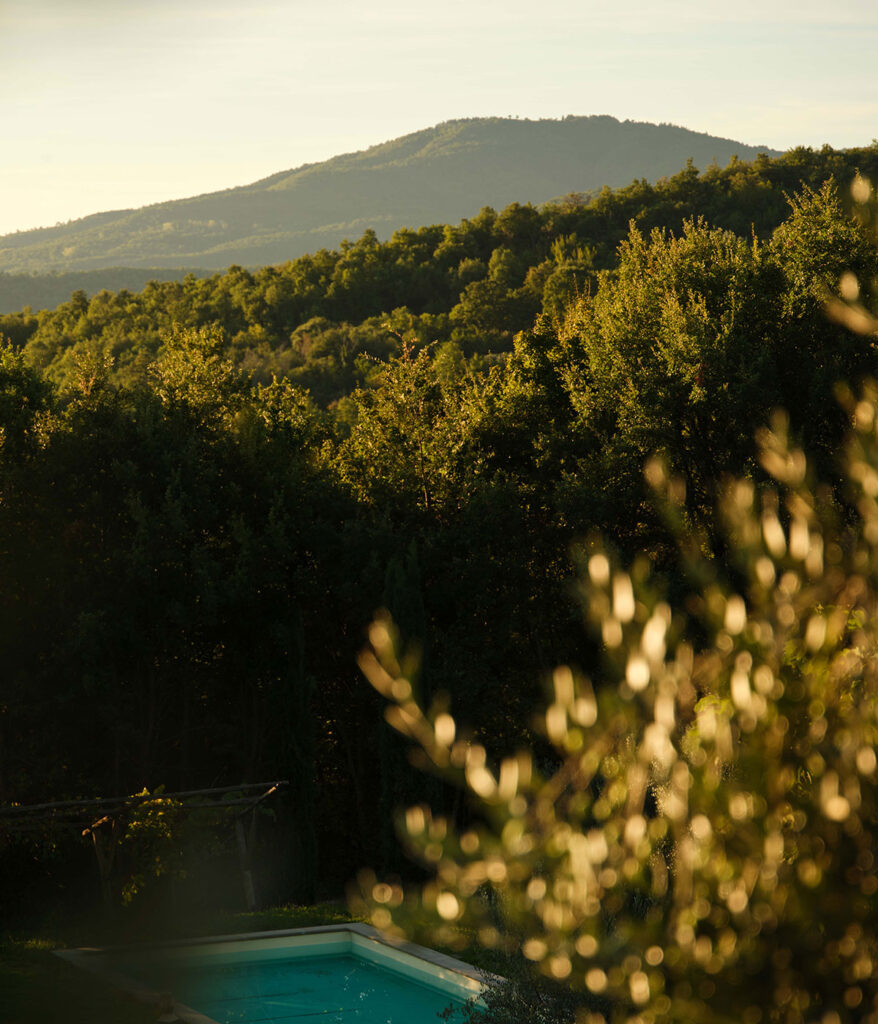


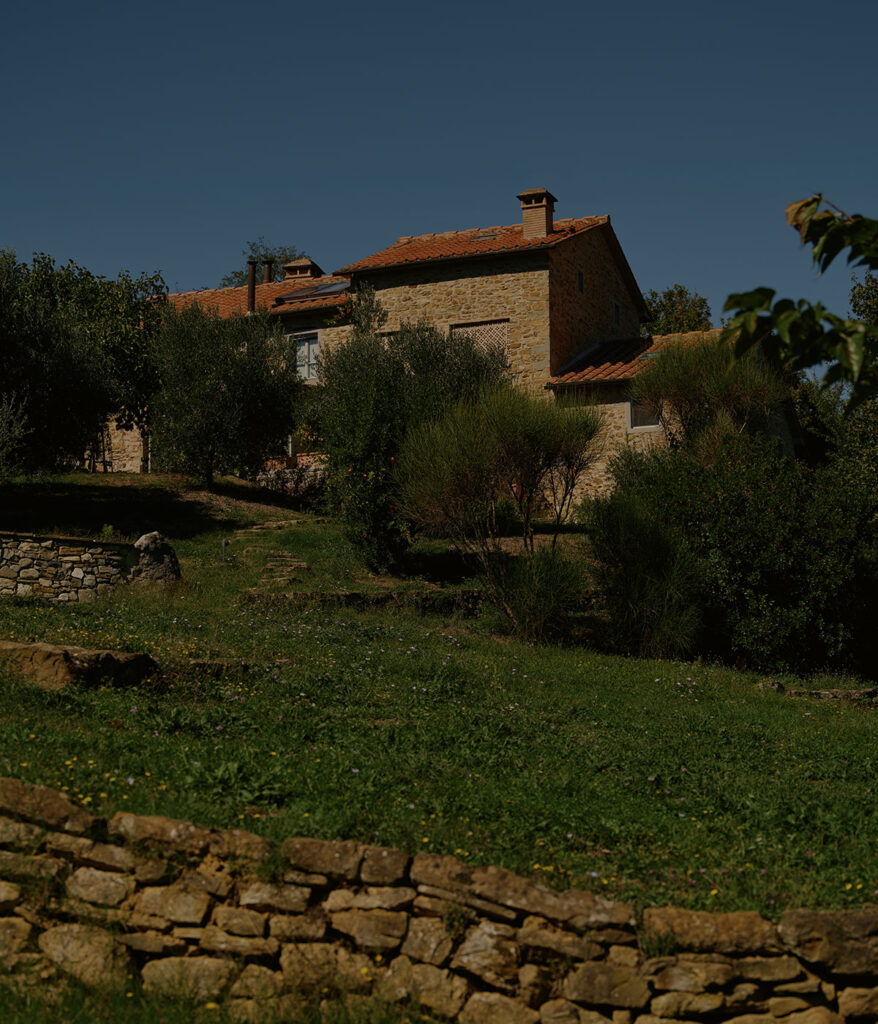
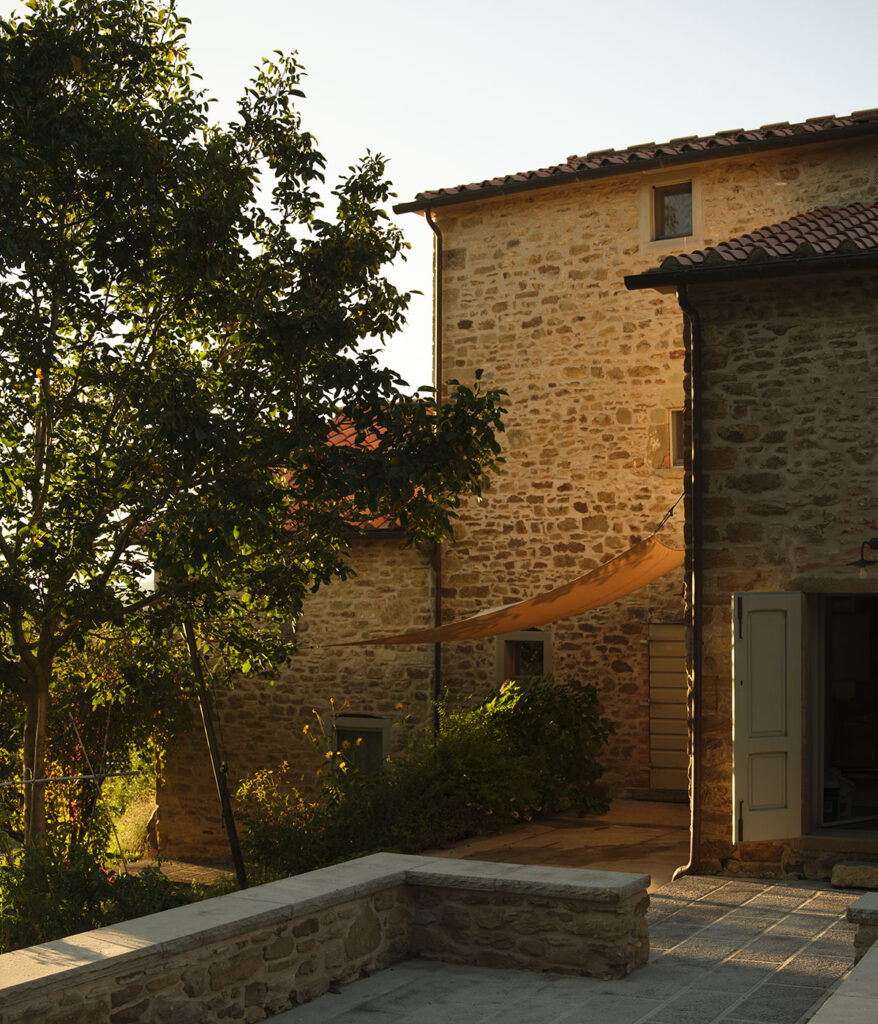
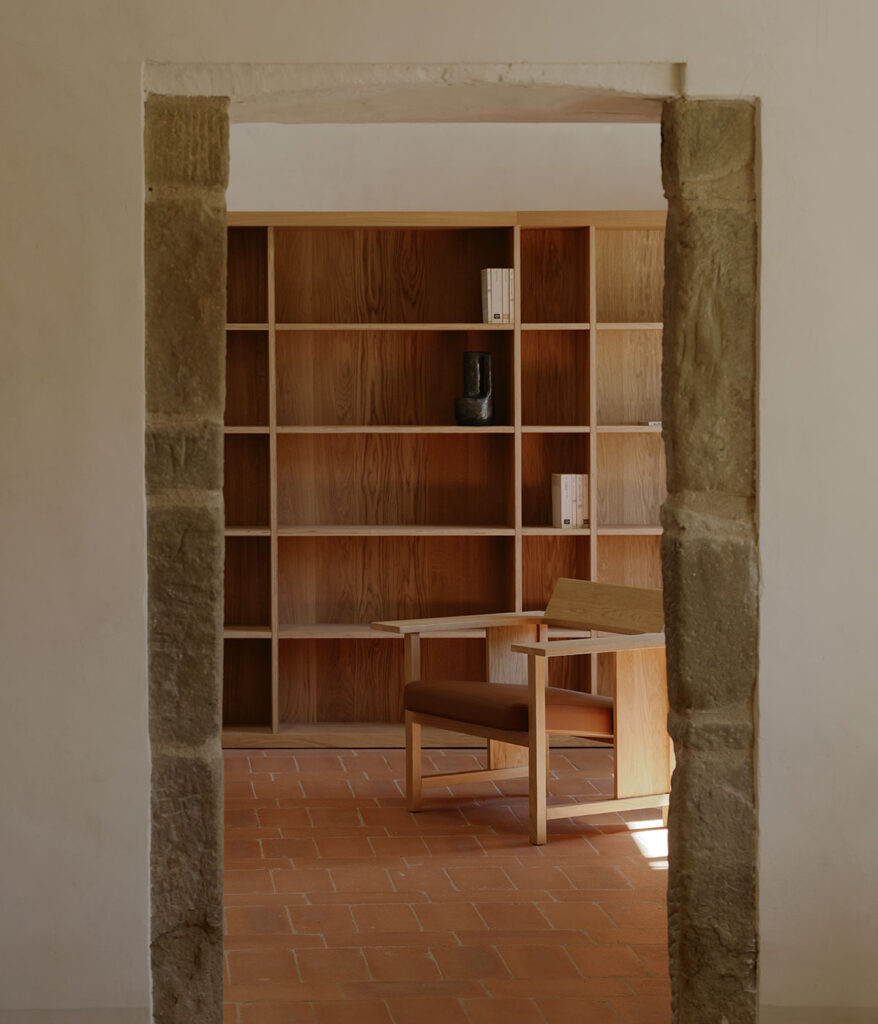
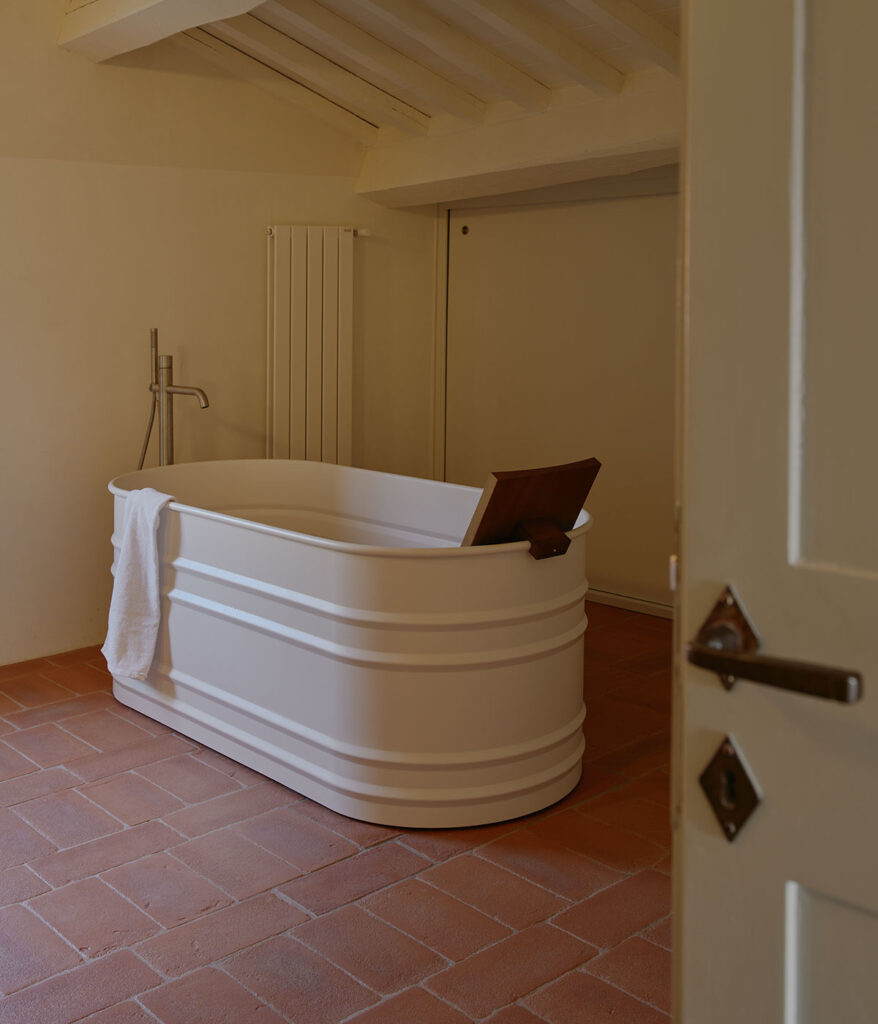
The structure, composed of mixed stone and brick masonry, retains its original spatial rhythm: a sequence of small rooms defined by thick walls, terracotta floors and pietra serena elements in the former stable areas. Each level opens independently to the outside, forming autonomous portions that accommodate bedrooms, bathrooms and shared spaces.
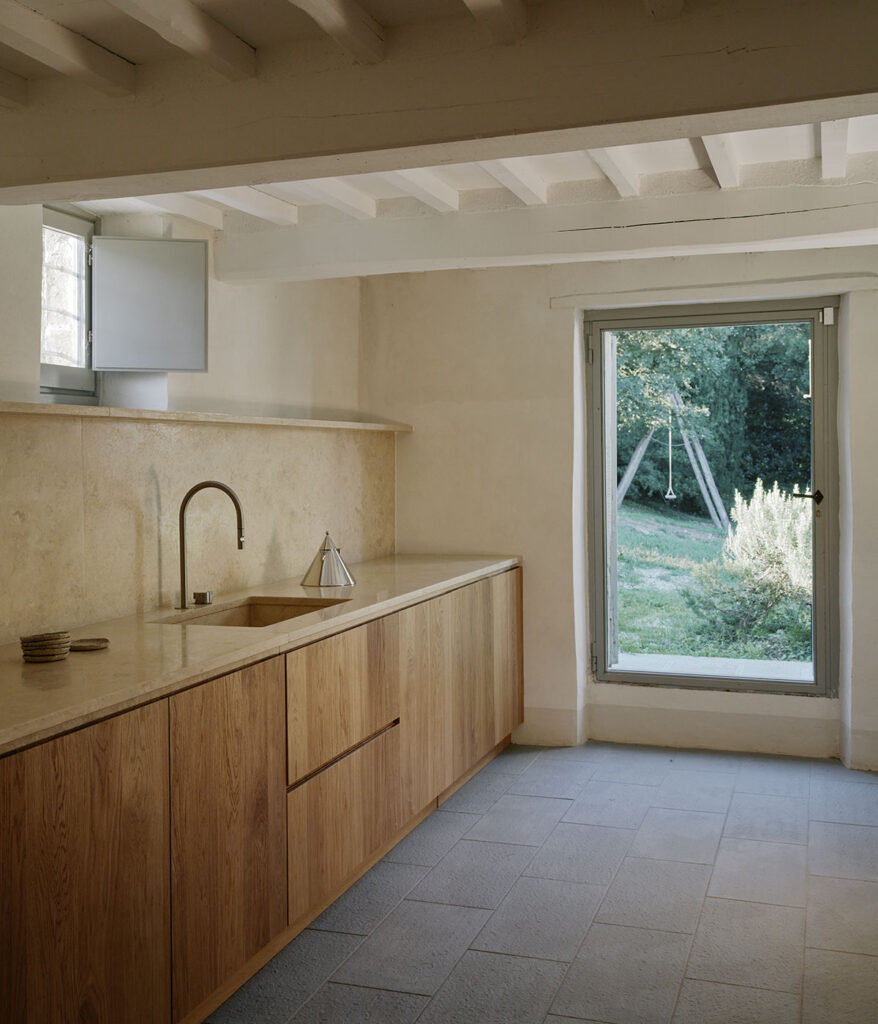
The intervention works by subtraction rather than addition. Existing surfaces are preserved where possible, original flooring is restored in kitchens and bathrooms, and walls are finished with lime-based plaster, maintaining a material continuity with the past.
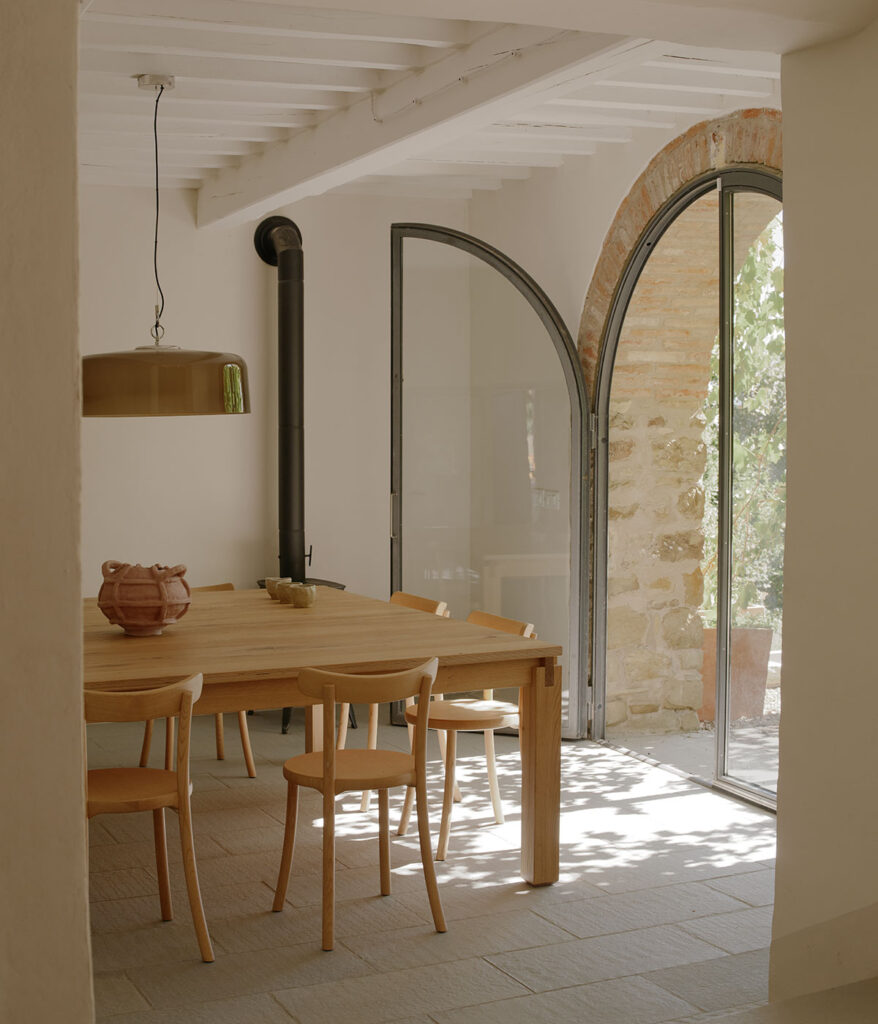
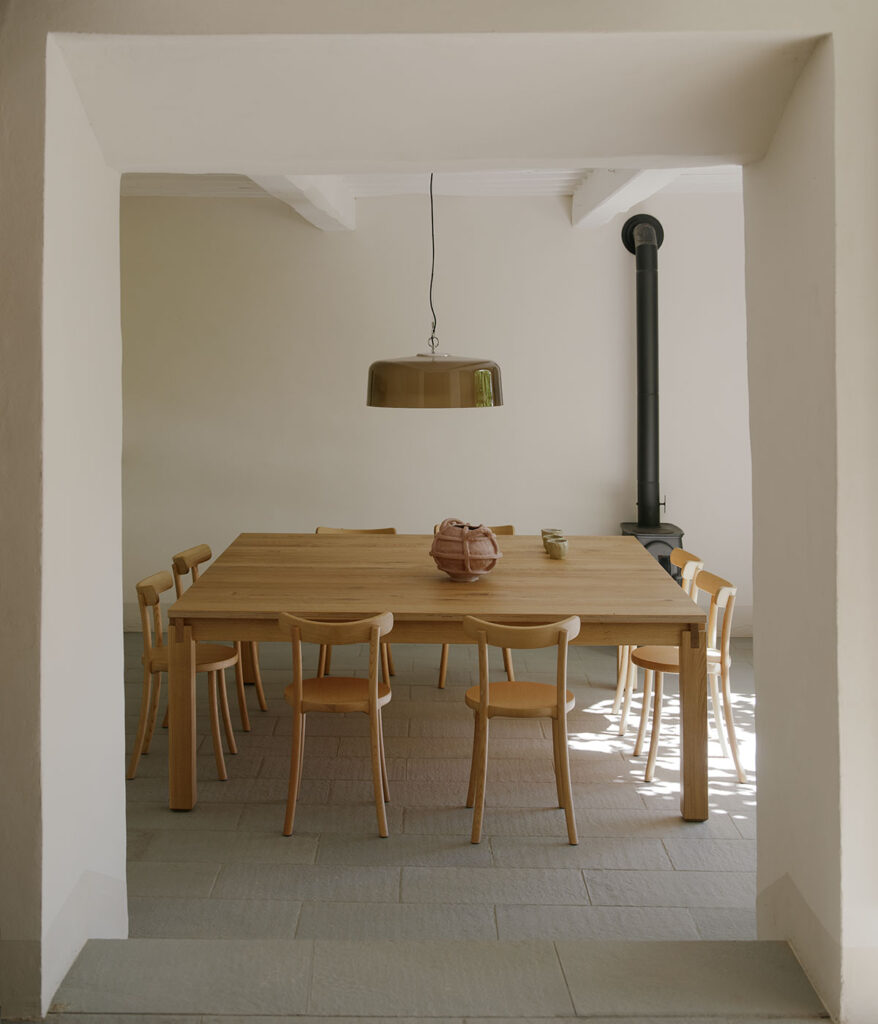
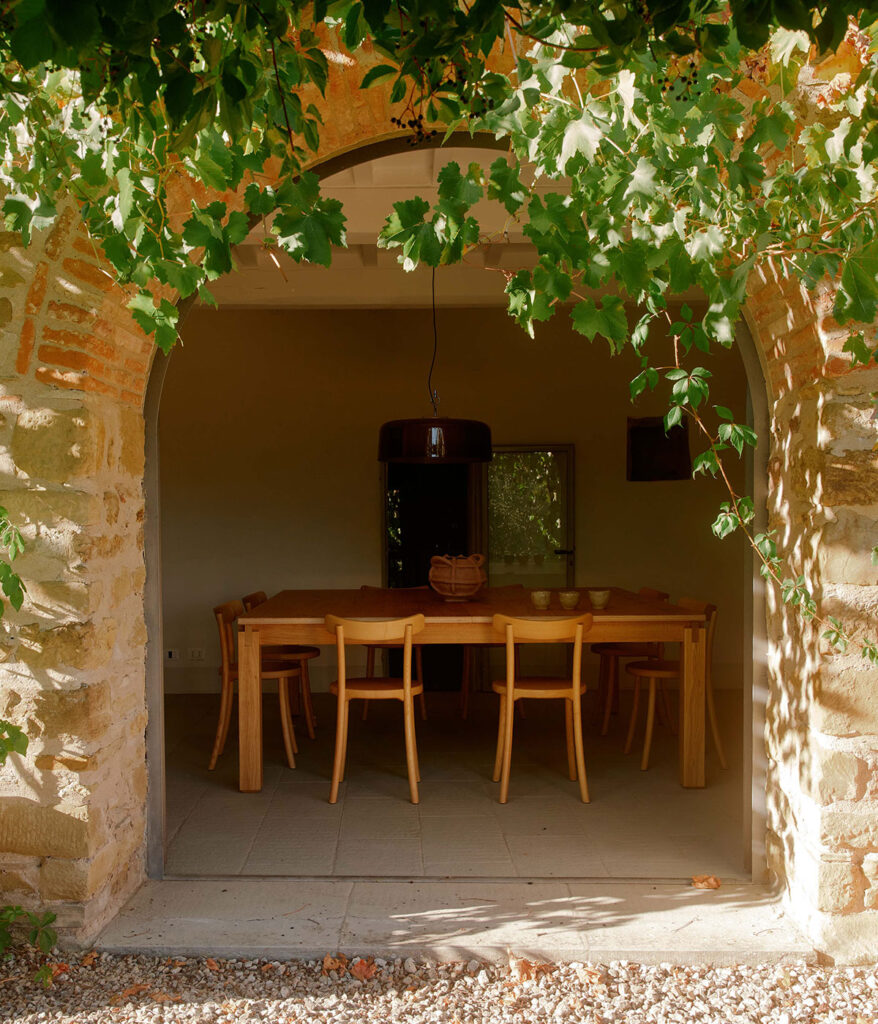
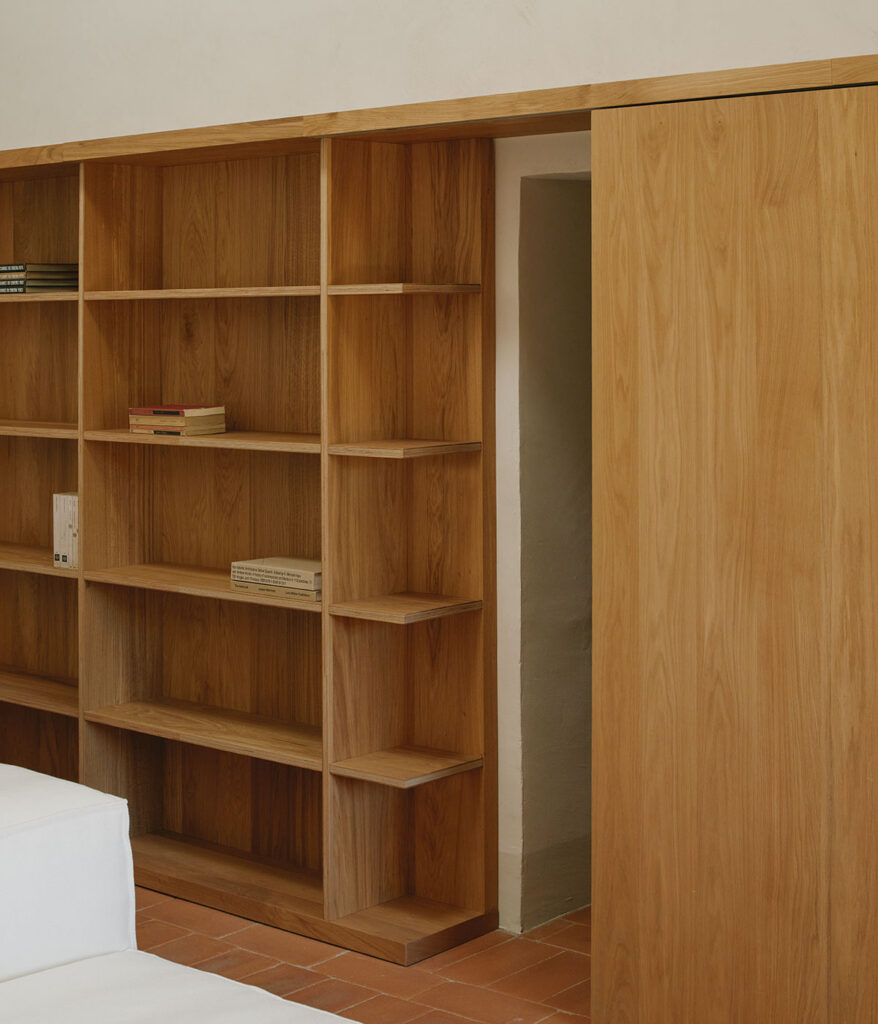
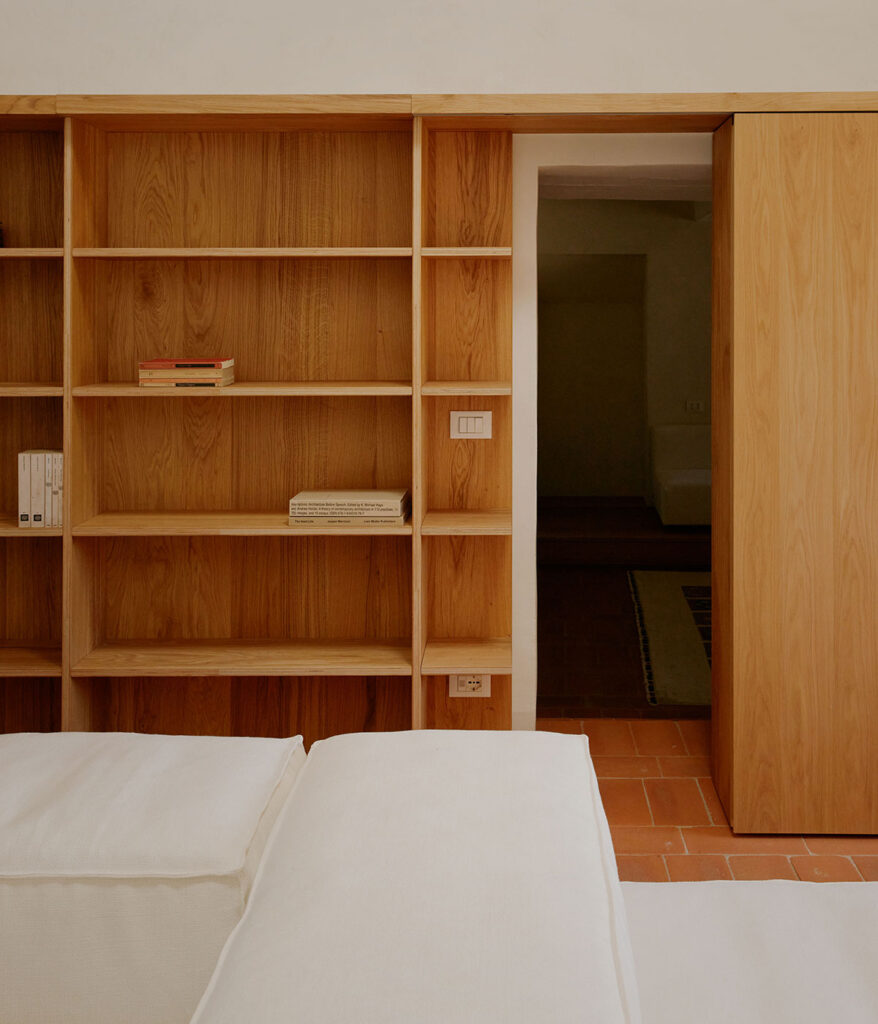
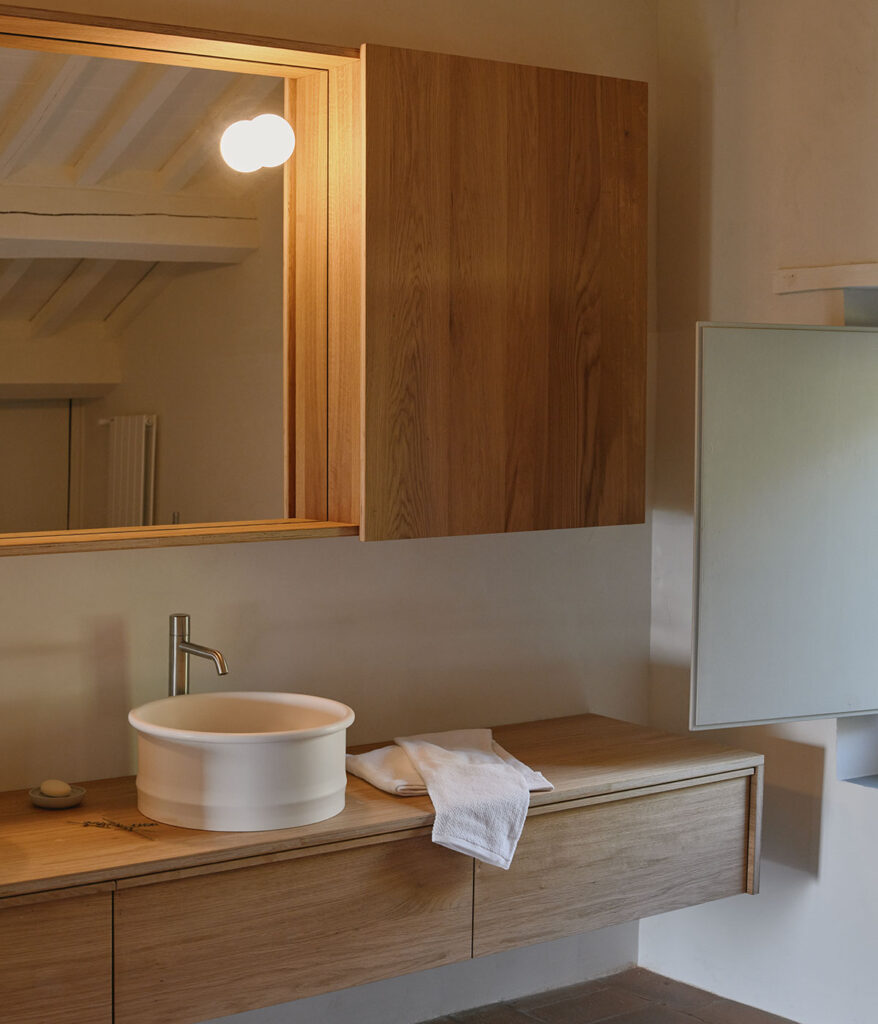
The interior project, developed by Giacomo Moor, is based on a precise and controlled use of material. All furnishings are conceived using a single construction logic: a semi-finished layered wood, composed of a birch plywood core clad with solid oak. This approach generates a consistent language throughout the house, where each element — from bookcases to wardrobes, desks to shelving — becomes part of a coherent system.
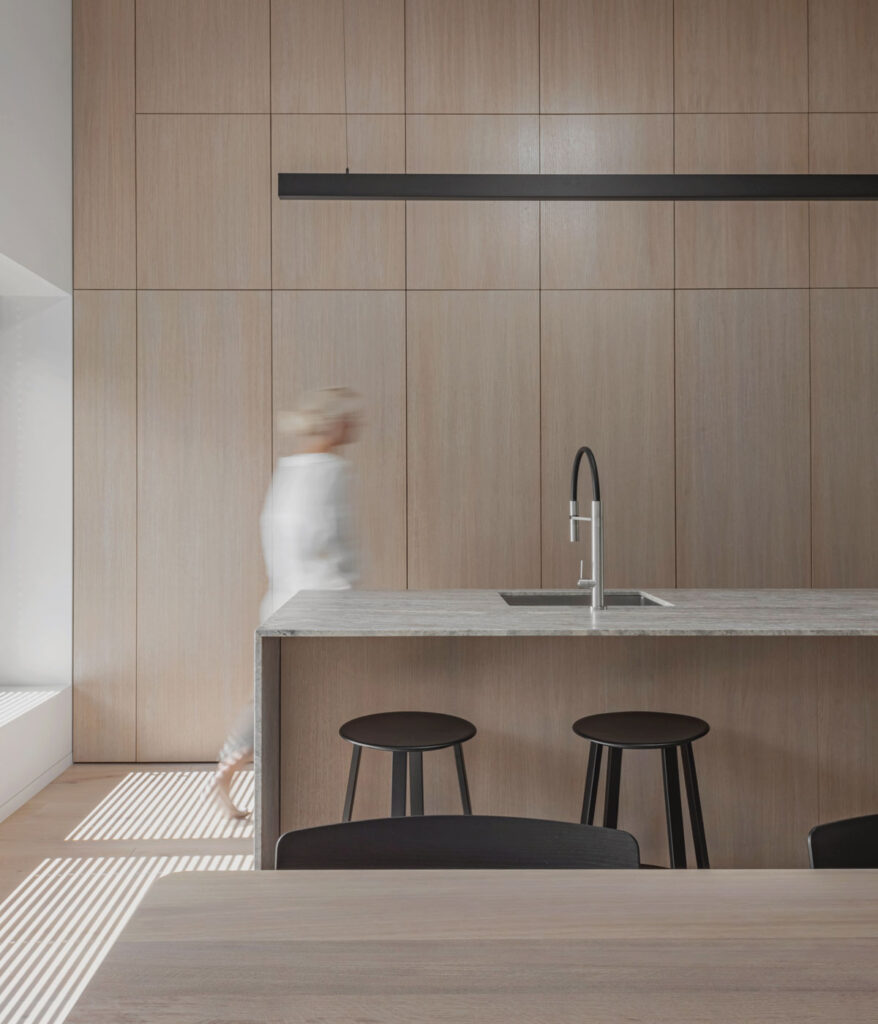
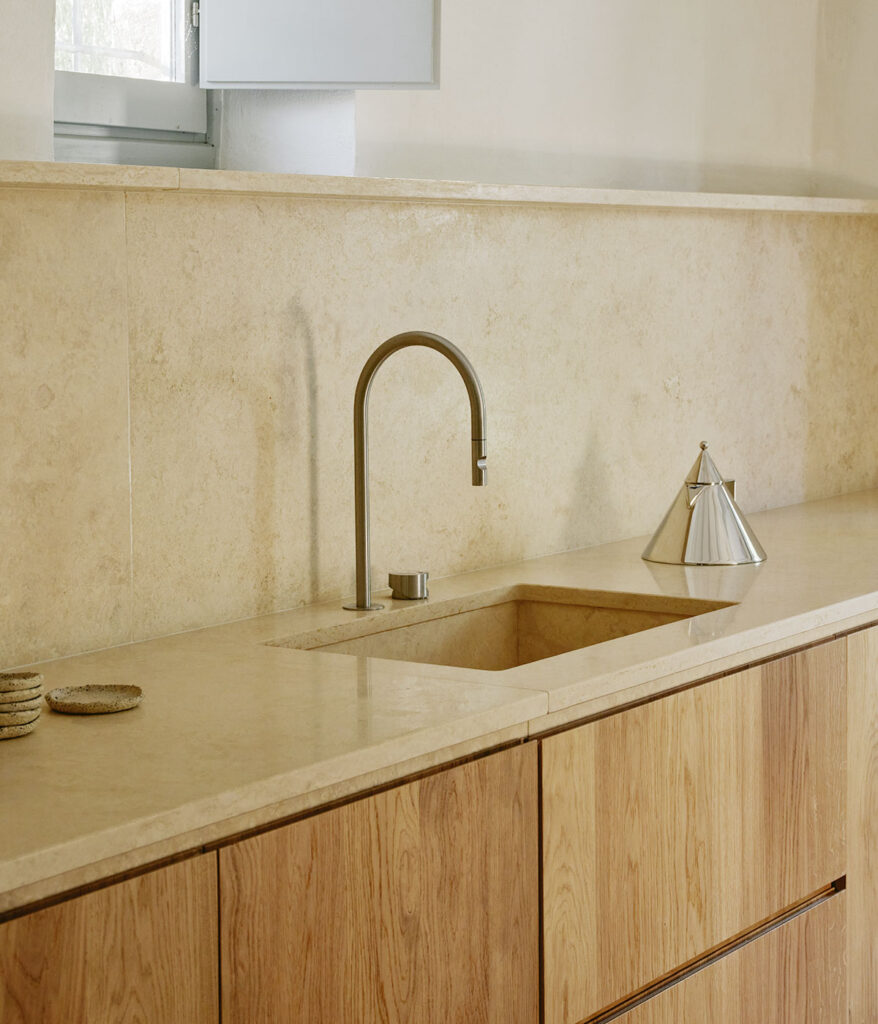
Raised wooden platforms define the living areas, subtly organizing space without introducing partitions. Custom-designed dining tables in solid oak and teak extend this logic, combining craftsmanship with structural clarity. The kitchen, also designed by Moor, is organized around a large countertop integrating a Botticino marble sink. Here, we contributed with the Thumb collection, introducing a calibrated, functional presence that aligns with the overall material discipline of the project.
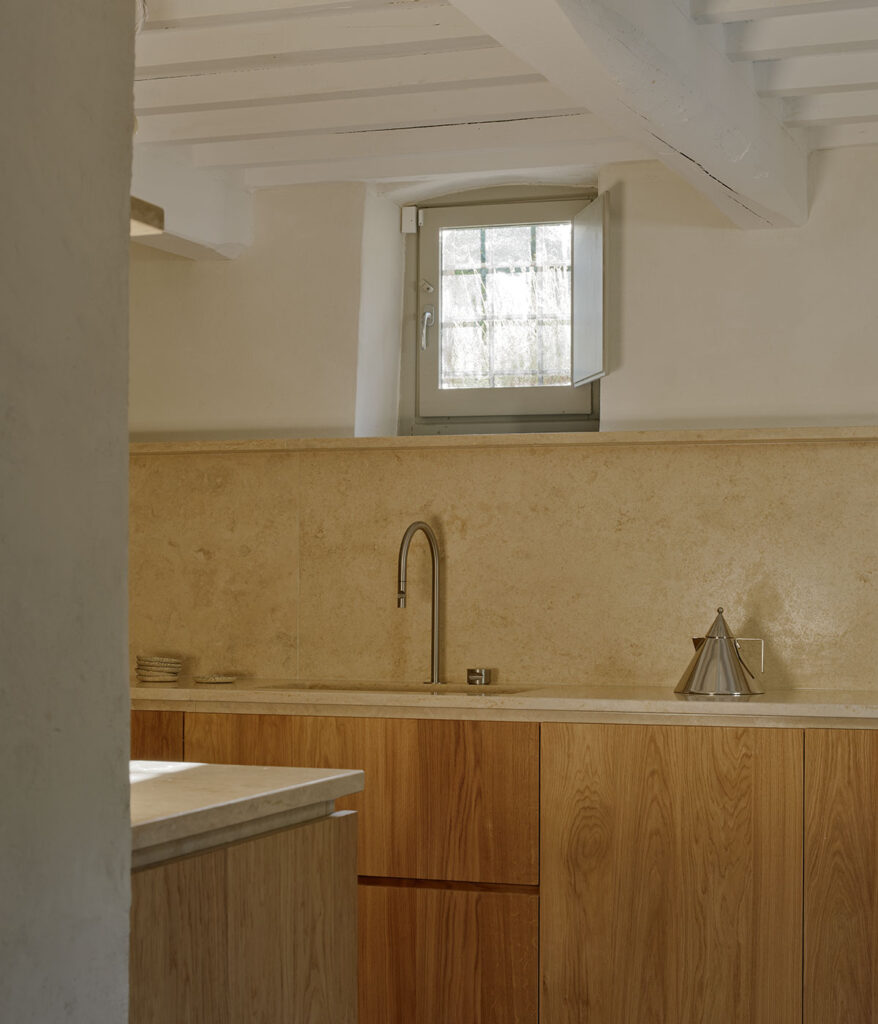
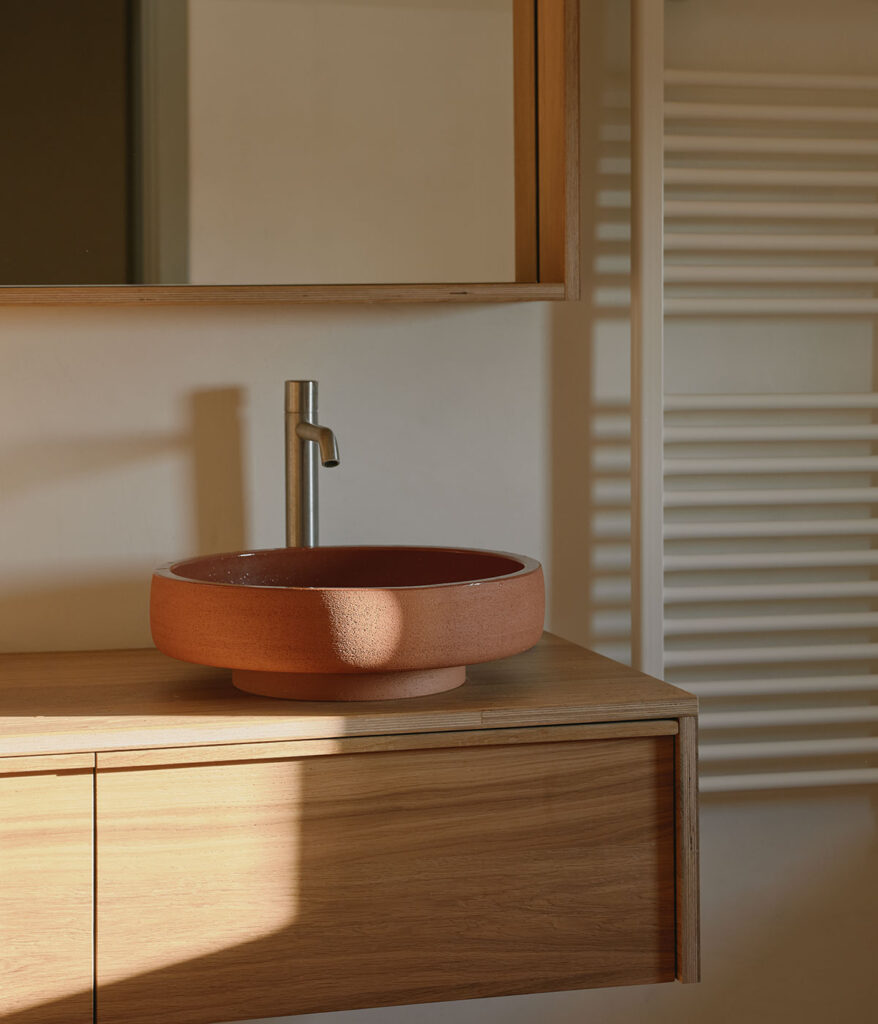
In the bathrooms, the choice fell on the Stereo collection, designed by Luca Papini. Based on primary geometries and reduced to its essential components, Stereo establishes a direct relationship between form and use. Its presence is precise and controlled, engaging with stone, plaster and wood without becoming decorative.
Across the project, stainless steel acts as a quiet counterpoint to the tactile richness of the interiors. It does not seek contrast, but balance — reflecting light, reinforcing proportions, and maintaining a technical clarity that resonates with the overall architectural approach.
This is not a nostalgic reconstruction, but a measured transformation: an architecture that preserves its history while introducing a contemporary order, where every intervention is deliberate, necessary, and built to last.