

Friends: Andrea Ferrari + NM3
Post-pandemic era has given rise to a new socio-political meaning of outdoor culture. What was once a niche or purely functional domain has become a space of collective reorientation. The widespread return to nature, to open air, to environments less mediated by infrastructure, has not only reshaped habits but also redefined the symbolic role of objects. In light of this, gorpcore becomes not only a stylistic approach but also an expression of larger changes, as there is a desire to be resilient, independent, and closer to the physical world.
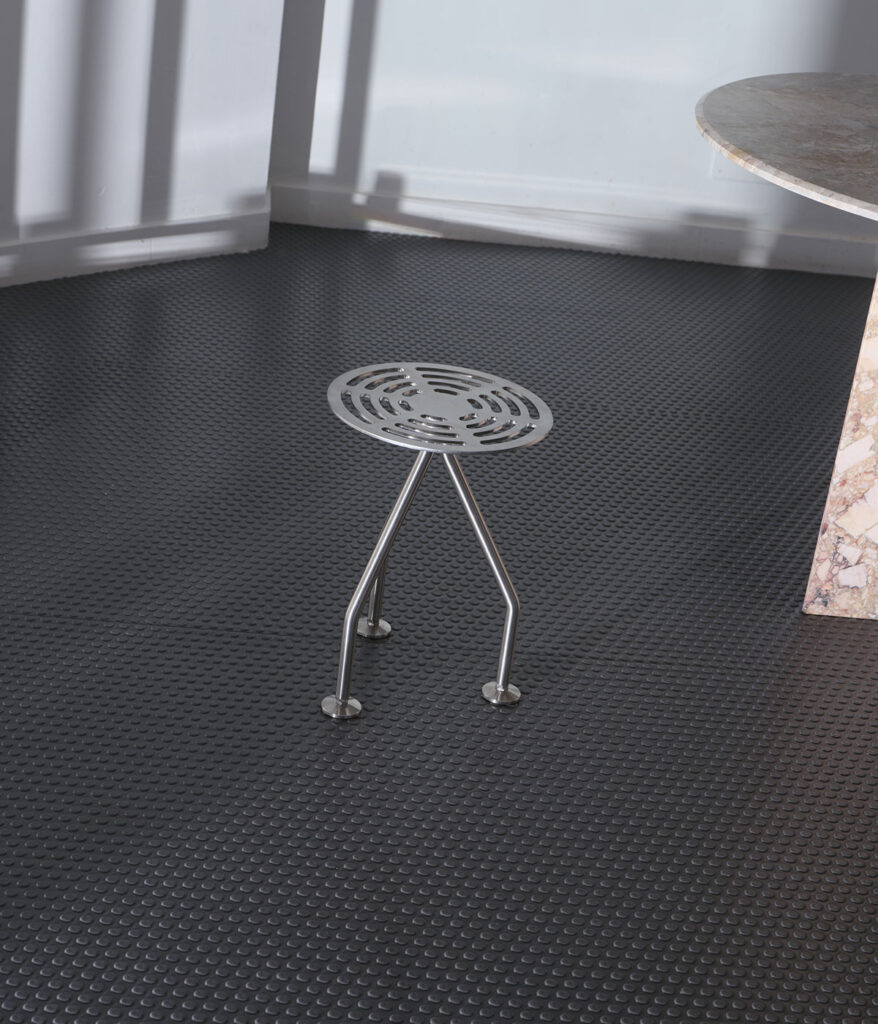
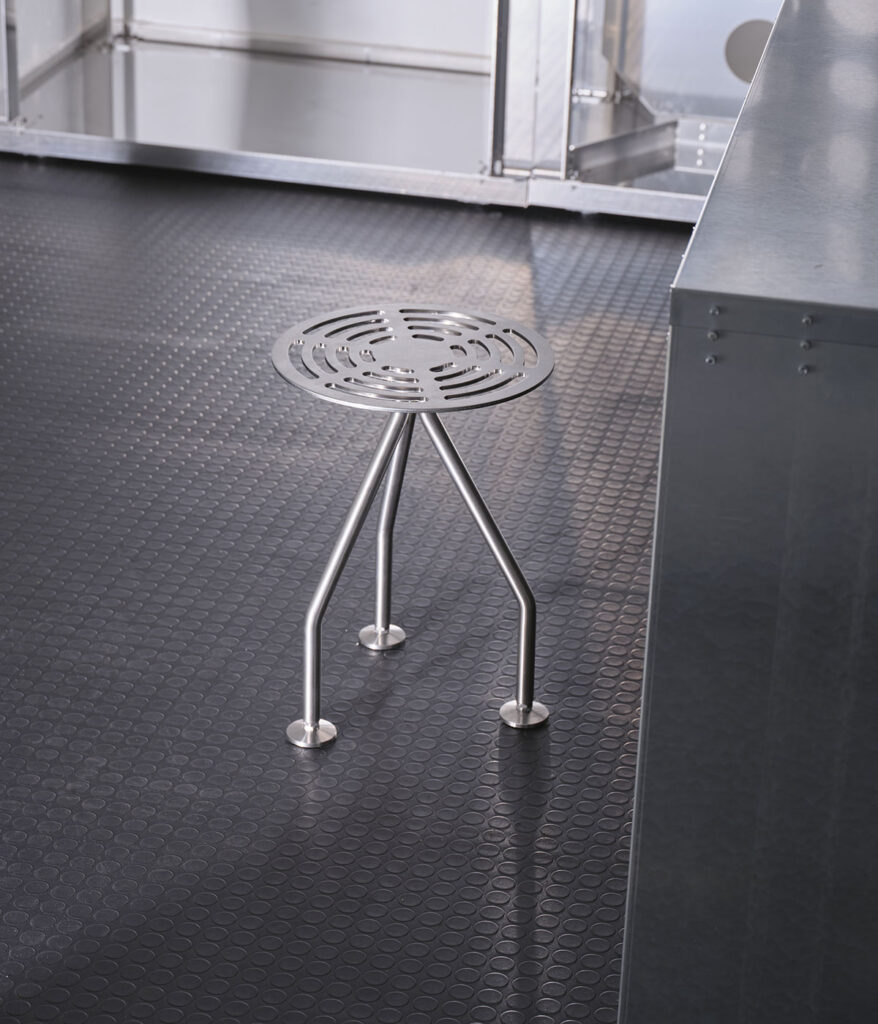
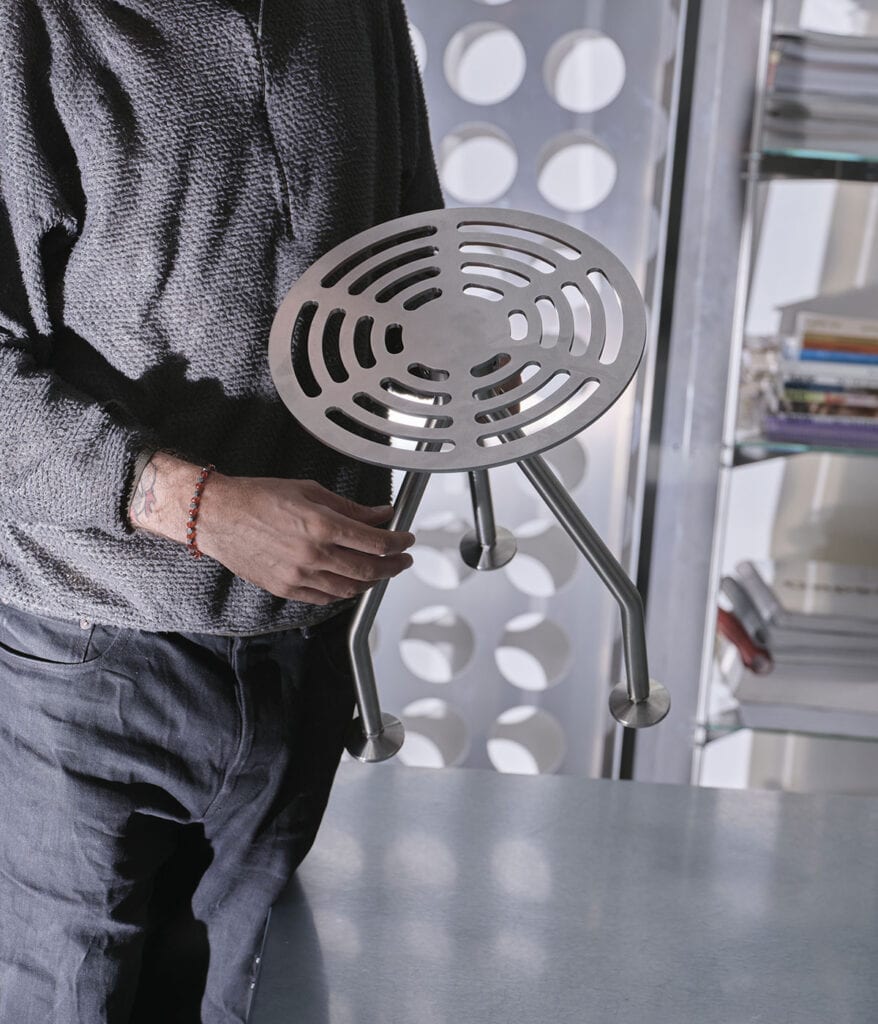
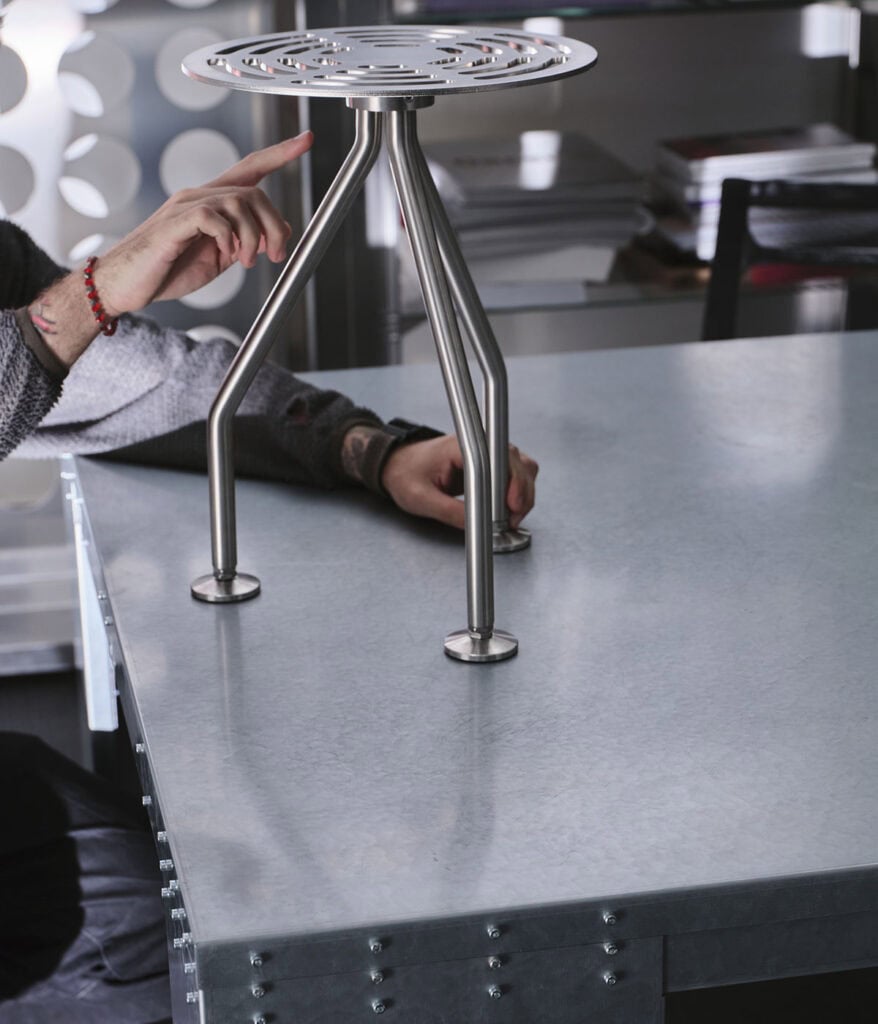
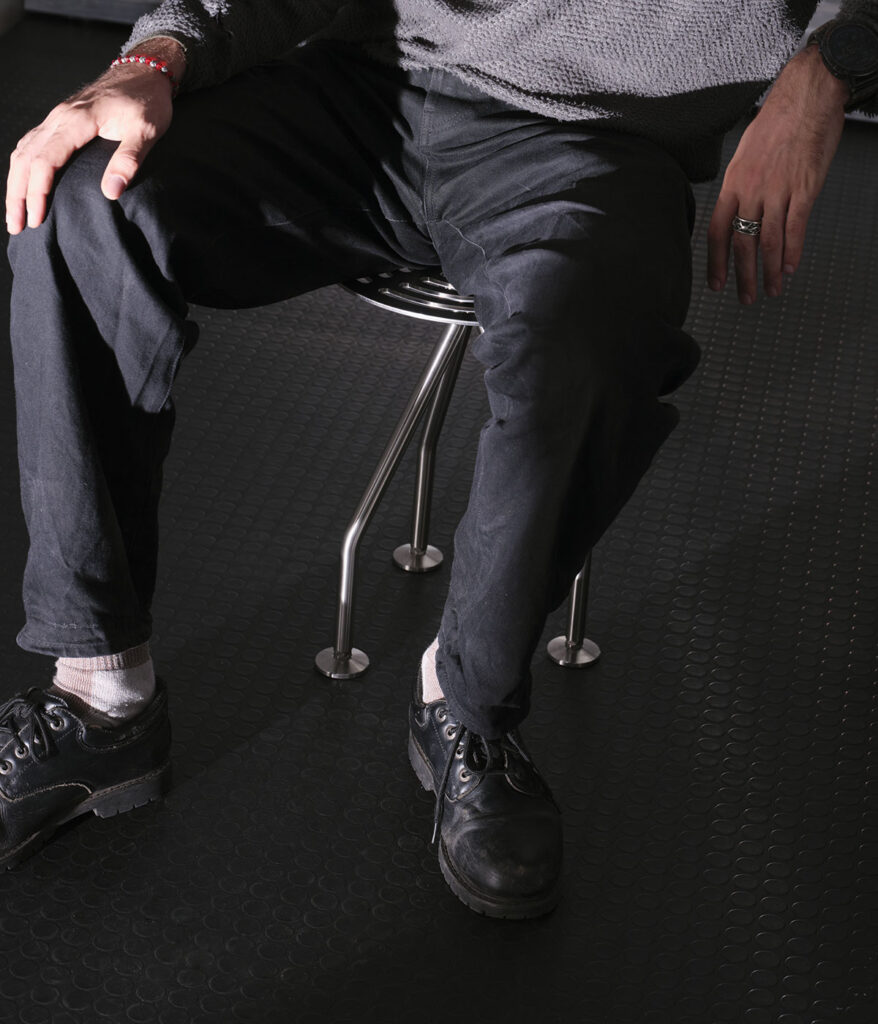
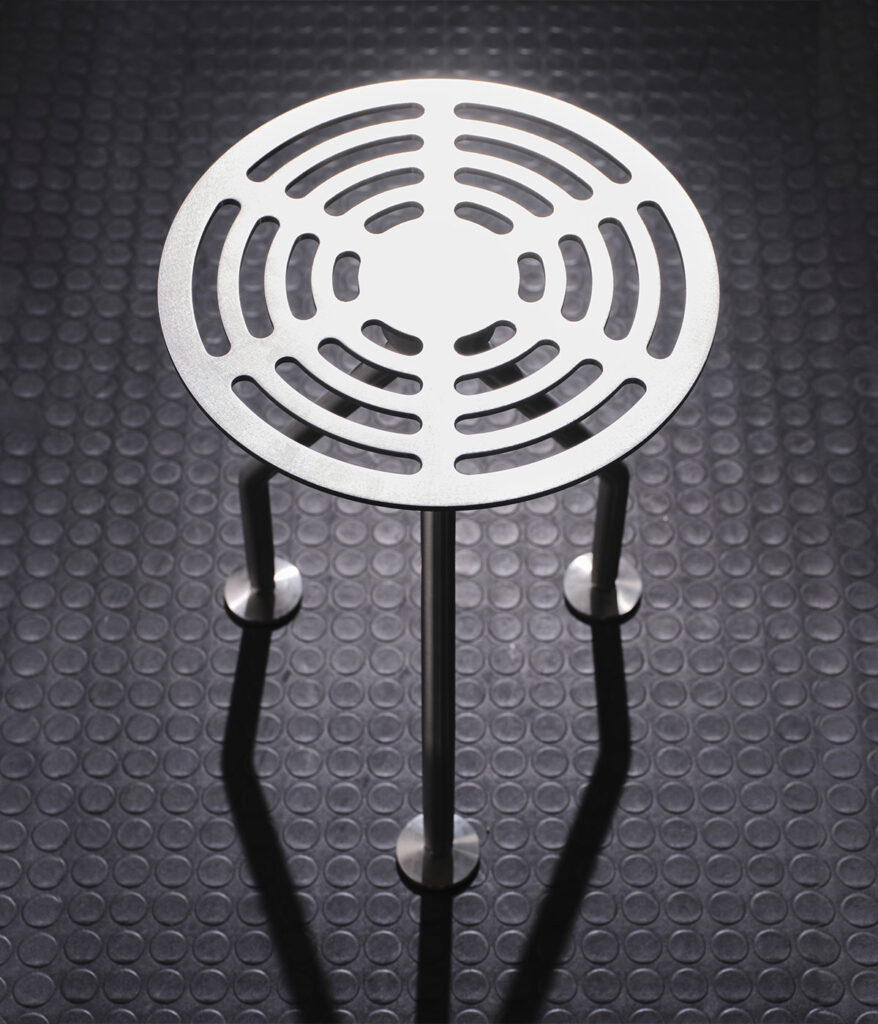
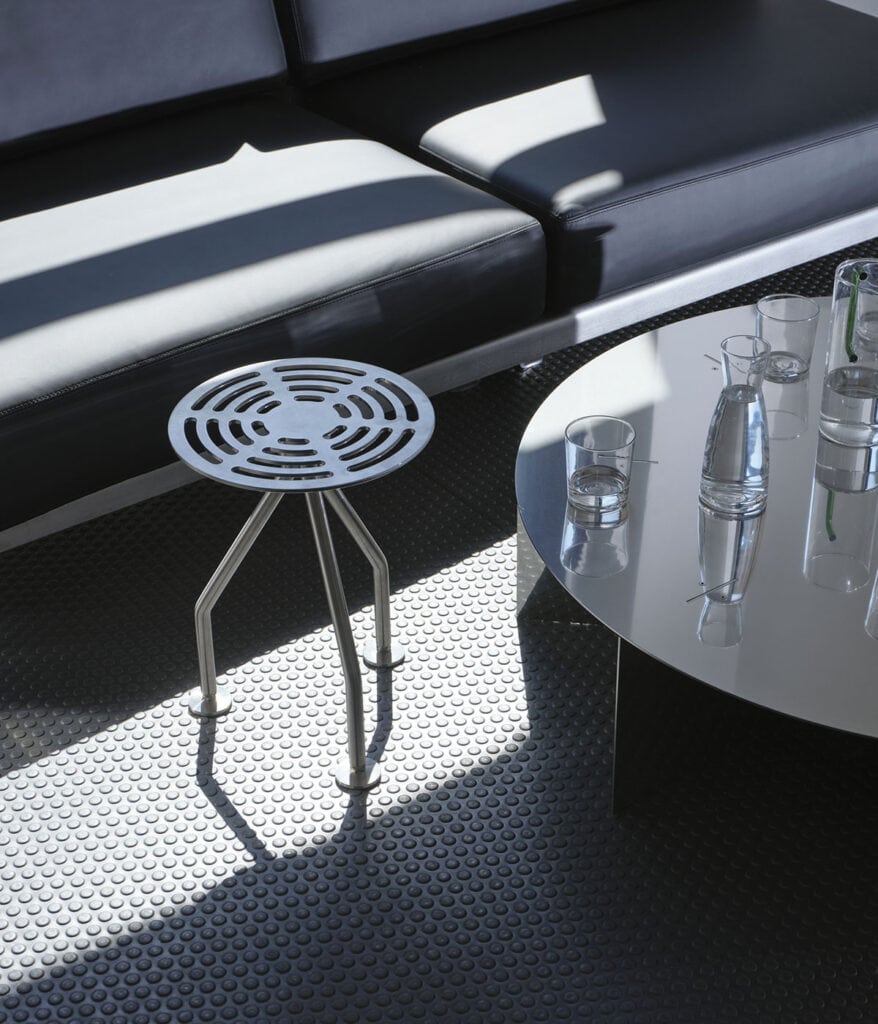
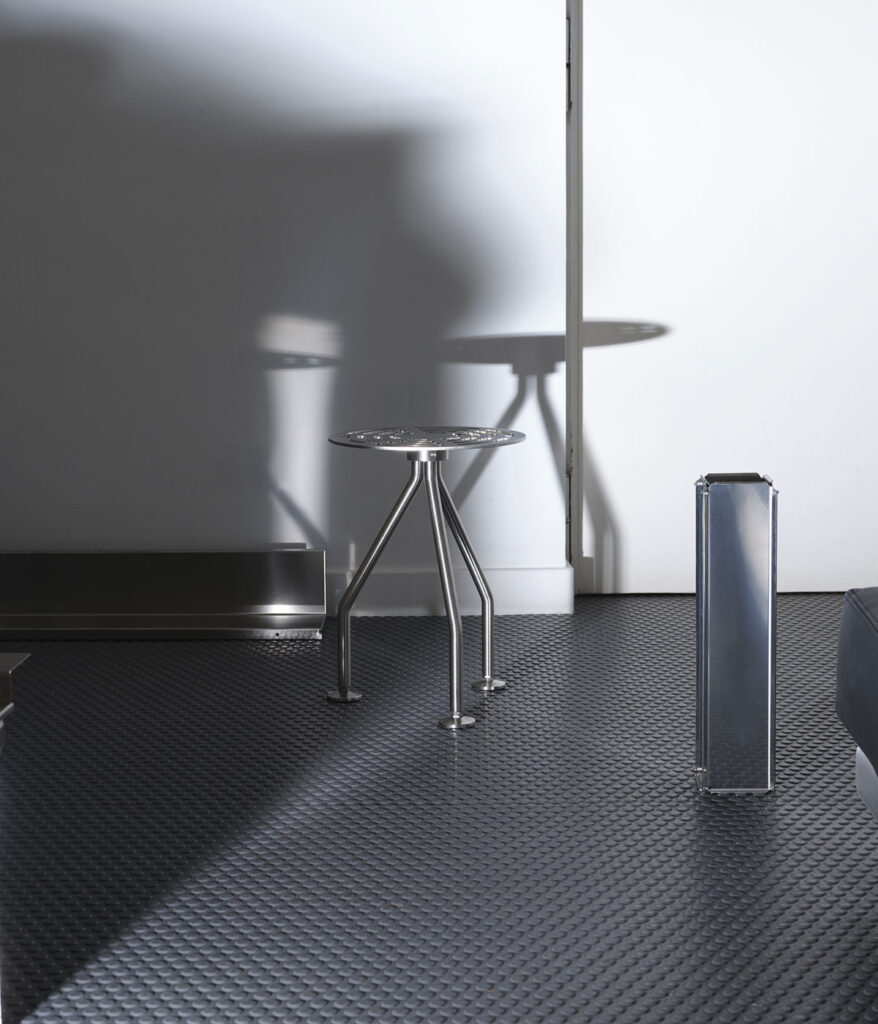
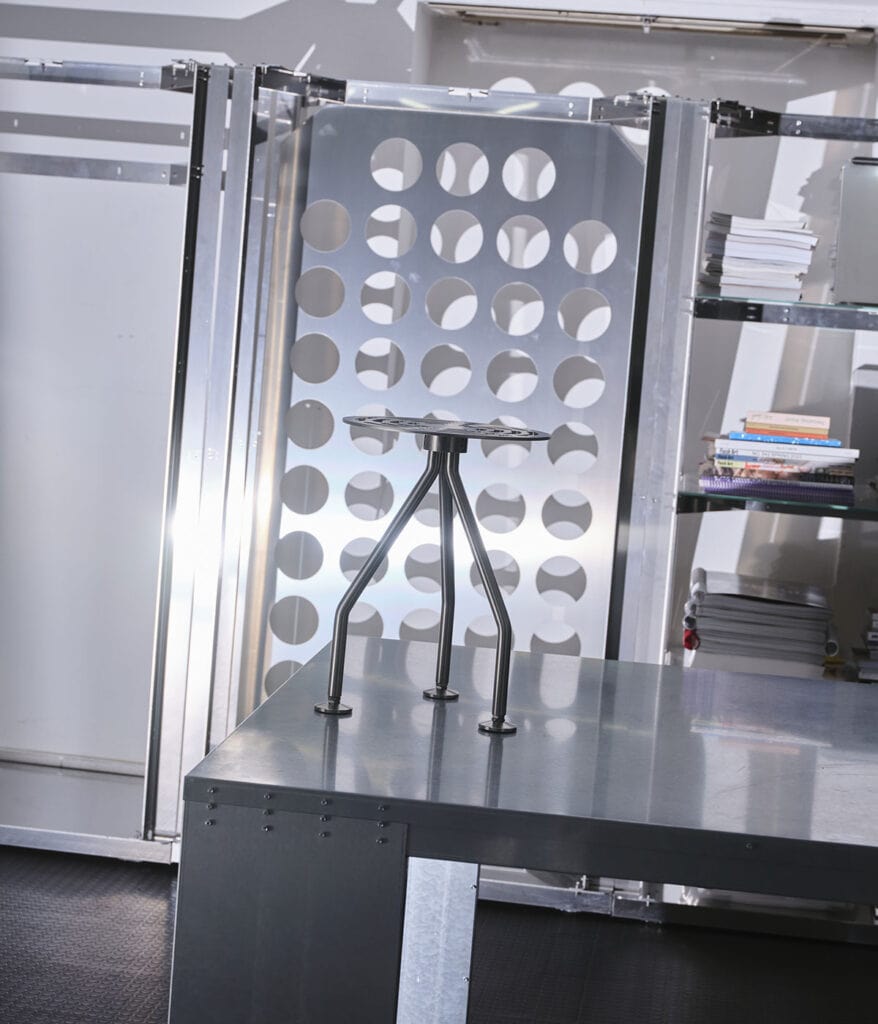
The partnership between QuadroDesign, NM3, and designer Andrea Ferrari fits perfectly into this scenario. The OG—NM301 stool, crafted from stainless steel and designed for outdoor use, is characterized by the partners’ common affinity for industrial manufacturing, simplification, and structural transparency. Focusing on the principles of aircraft design and the construction of bicycles, the piece is an example of technical expertise put to work within a domestic context, without losing its purpose.


Interview by Simone Lorusso
“The idea came after visiting, together with Francesco from NM3, the workshop of a historic bicycle manufacturer in Milan. They had previously produced components by bending steel tubes, which led me to think this could be an interesting direction to explore.”
— Andrea Ferrari
Andrea, your work often starts from production processes rather than form. How did this approach shape the development of OG—NM301?
AF: The idea came after visiting, together with Francesco from NM3, the workshop of a historic bicycle manufacturer in Milan. They had previously produced components by bending steel tubes, which led me to think this could be an interesting direction to explore. At the same time, I’ve always been fascinated by CNC milling machines, which in the bicycle industry have played a key role in shaping an entire generation of products. Together, these references, from tube bending to CNC machining, as well as the broader industrial processes behind bicycle design and production, became a strong influence in the development of this object.
NM3’s work is rooted in modernism and functionalism. How does OG—NM301 fit within your broader philosophy?
NM3: OG-NM301 follows a solid series of stools previously designed by NM3. Collaborating with QuadroDesign and Andrea Ferrari naturally led to a reinterpretation of NM3’s standard system-based objects, while preserving the brand’s distinctive industrial precision and its focus on structural honesty and assemblability. Maintaining raw stainless steel as the project’s core material was a natural and rational choice, demonstrating both its versatility and the rigor and adaptability of NM3’s design methodology.
Do you see OG—NM301 as part of a broader redefinition of living, where objects are no longer tied to fixed interiors, but operate across multiple environments and uses?
AF: OG—NM301 is a stool entirely made of stainless steel. The idea is that it is a furnishing complement that extends the technology and manufacturing techniques that QuadroDesign uses for its faucets. It is thus an object that can live in various environments, next to a dining table or in a studio for sitting and working, but it is not afraid of contact with water and can therefore be used in the bathroom as well as in spaces outside the home.
“A rigorous methodology helps prevent false statements and can be applied across architectural projects of all scales. More specifically, rational thinking and ordinary abstraction expand the possibilities of solutions for contemporary spatial and functional problems.”
— NM3
NM3: What we design and produce is not intended to communicate any statement. The versatility of both the object’s syntax and its material properties is certainly relevant, as it carries a strong sense of adaptability — in this sense, even a certain connection to gorpcore aesthetics. When a product embodies these characteristics, it becomes particularly valuable; ultimately, however, it is the user who defines its use, enabling multiple scenarios both indoors and outdoors. A rigorous methodology helps prevent false statements and can be applied across architectural projects of all scales. More specifically, rational thinking and ordinary abstraction expand the possibilities of solutions for contemporary spatial and functional problems.
The project references both aviation and bicycle construction. What do these two worlds represent for you, conceptually?
AF: The bicycle and the airplane are, for me, in different forms, two symbols of freedom at the service of human beings. From a design and engineering perspective, however, they are two diametrically opposite means: the airplane is extremely complex, and its macro scale contrasts with the often micro components it is made of. The bicycle, on the contrary, is composed of very few parts that are easy to understand but must function perfectly.
It is interesting to think that these two worlds, so far apart conceptually and in the space in which they operate, share very similar technologies in the production of their components. In this sense, OG—NM301 aims to be a meeting point, as light as an airplane but grounded like a bicycle.
The collaboration with QuadroDesign introduced high-precision CNC machining. How did this impact the project?
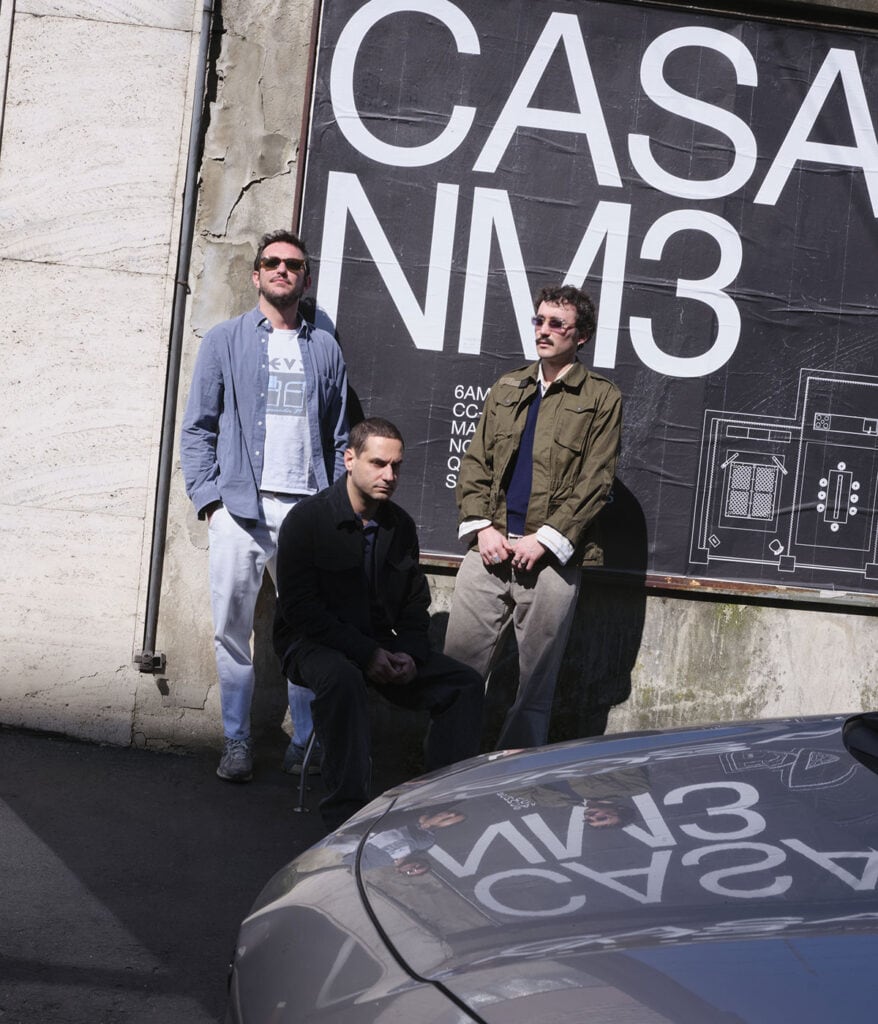
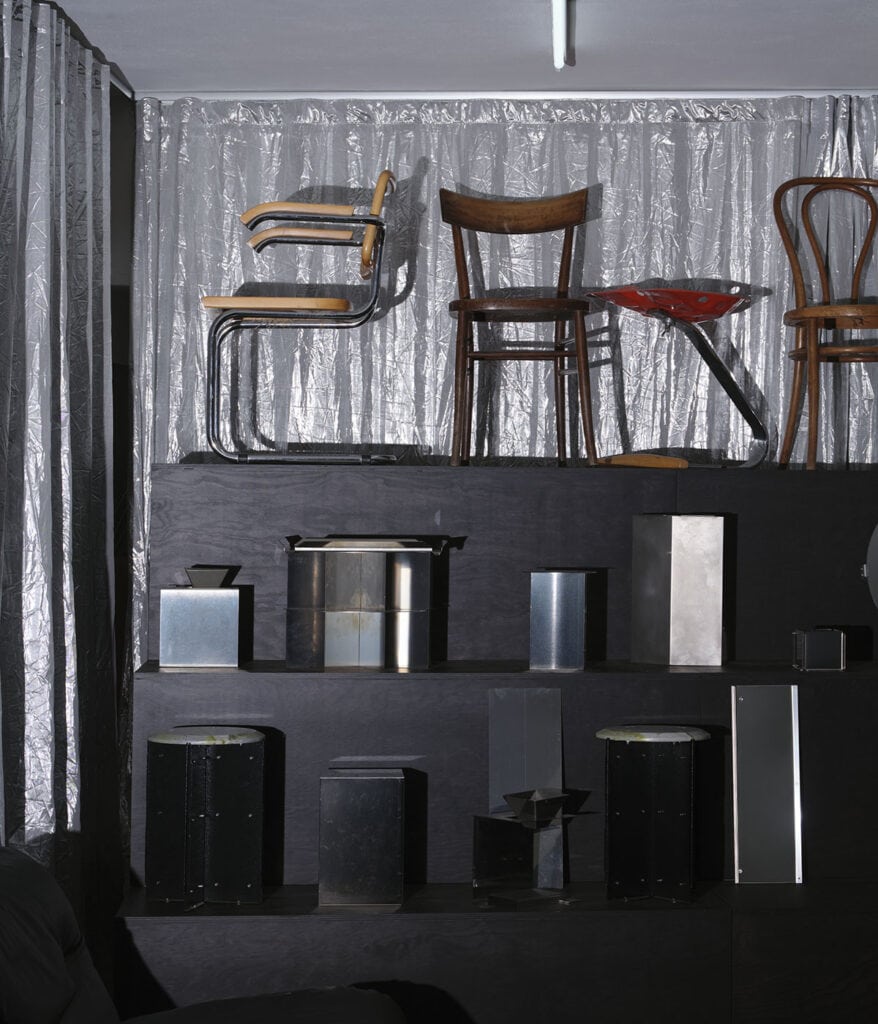
NM3: The stool subtly represents an original collaboration between two design companies, operating in a way reminiscent of early-2000s fashion brand partnerships; a pragmatic merging of both aesthetic and technical expertise. NM3 and QuadroDesign clearly share common ideals, as well as a mutual interest in materials, minimalism, refined industrial precision, and manufacturing processes. OG-NM301 figuratively merges the two brands by literally assembling multiple elements carefully produced by both manufacturing realities, and the final product ultimately reflects this synthesis.
You are also deeply involved in outdoor culture and experimental clothing. How does gorpcore influence your approach to product design?
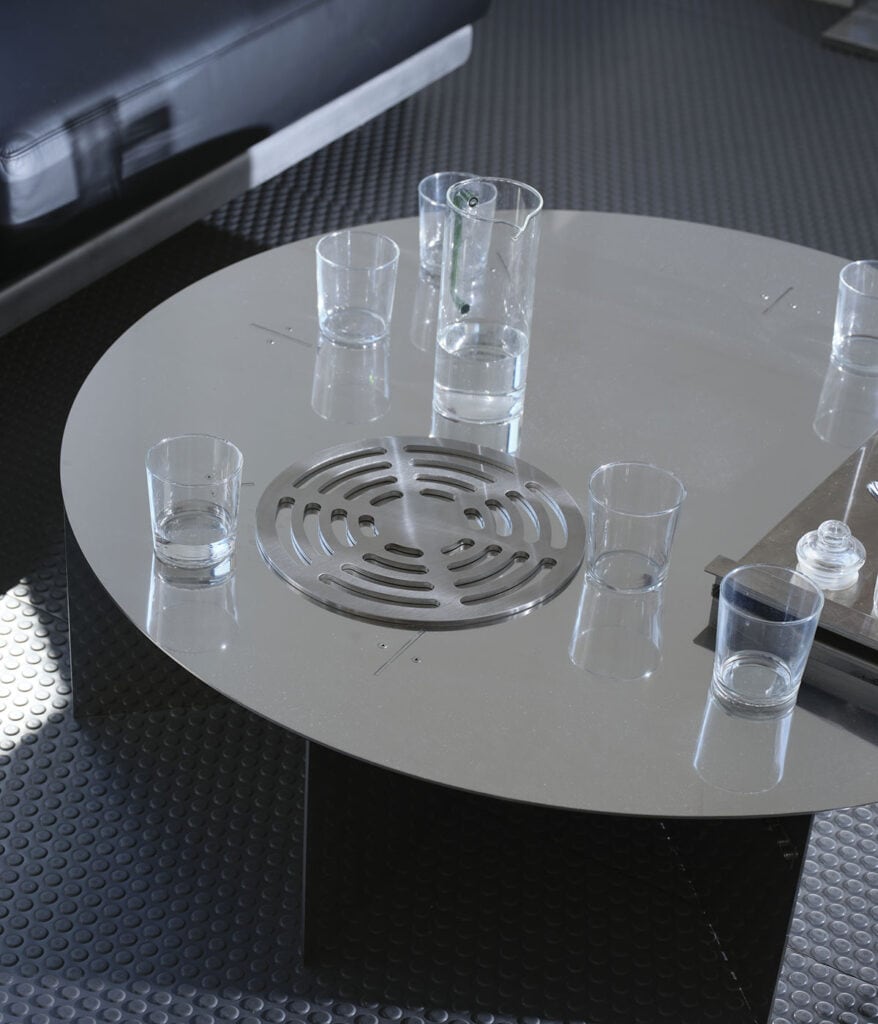
AF: What we today define as gorpcore clothing represents, for me, first and foremost function. Design is a consequence of the research into high-performance materials that serve a specific purpose in an outdoor environment.In this sense, the designer’s main task is undoubtedly research and design clarity, giving a product a precise and well-defined function. This means thinking and designing with an understanding of the manufacturer’s production capabilities, remaining realistic and bringing processes into a dimension of clear functionality.These values and the way of thinking that has developed in me over the past few years have certainly influenced the design of OG—NM301, stripping away frills and materials and resulting in a monomaterial object that is, above all, conceived to be industrially produced.
Durability here is not only technical but also cultural. How do you interpret longevity as a design value in relation to contemporary consumption patterns?
NM3 : NM3 considers durability a fundamental ecological value, expressed not only through materials but also through its overall methodology and approach to product design. In a relatively low-tech way, the studio quietly supports enduring, almost ancient principles of construction. The assemblability and adaptability of our systems, also reflected in the collaboration with QuadroDesign and Andrea, are essential aspects of a design approach intended to endure over time.
In the post-pandemic context, outdoor space has become a primary site of everyday life. How does this shift reshape your understanding of where and how design should operate?
AF: As a great enthusiast of the outdoors and of outdoor object design (such as camping and functional gear), I believe that what this world can offer interior design is the pursuit of essentiality. Essentiality understood as function and as clarity of the final use of a product.This does not mean that an object must necessarily exist only in one type of space, but rather that it can coexist in different situations thanks to values such as material longevity and repairability. This is certainly a point where outdoor and indoor design can find common ground.
NM3: We do not believe that our work represents a radical shift in relation to the post-pandemic period, although the brand was founded at its very beginning. What we do believe, however, is that products should be versatile enough to allow for an outstanding openness of function within domestic environments and contemporary living standards.
“As a great enthusiast of the outdoors and of outdoor object design, I believe that what this world can offer interior design is the pursuit of essentiality.”
— Andrea Ferrari


