Trastevere Liberty by STUDIOTAMAT
In the heart of Rome, within the Trastevere district, STUDIOTAMAT reimagines a small Liberty-style villino concealed inside the courtyard of a late 19th-century building. Once a caretaker’s house or a neighborhood doctor’s office, the forgotten structure is transformed into an intimate urban retreat for two, spread across three levels and completed by a green rooftop terrace.
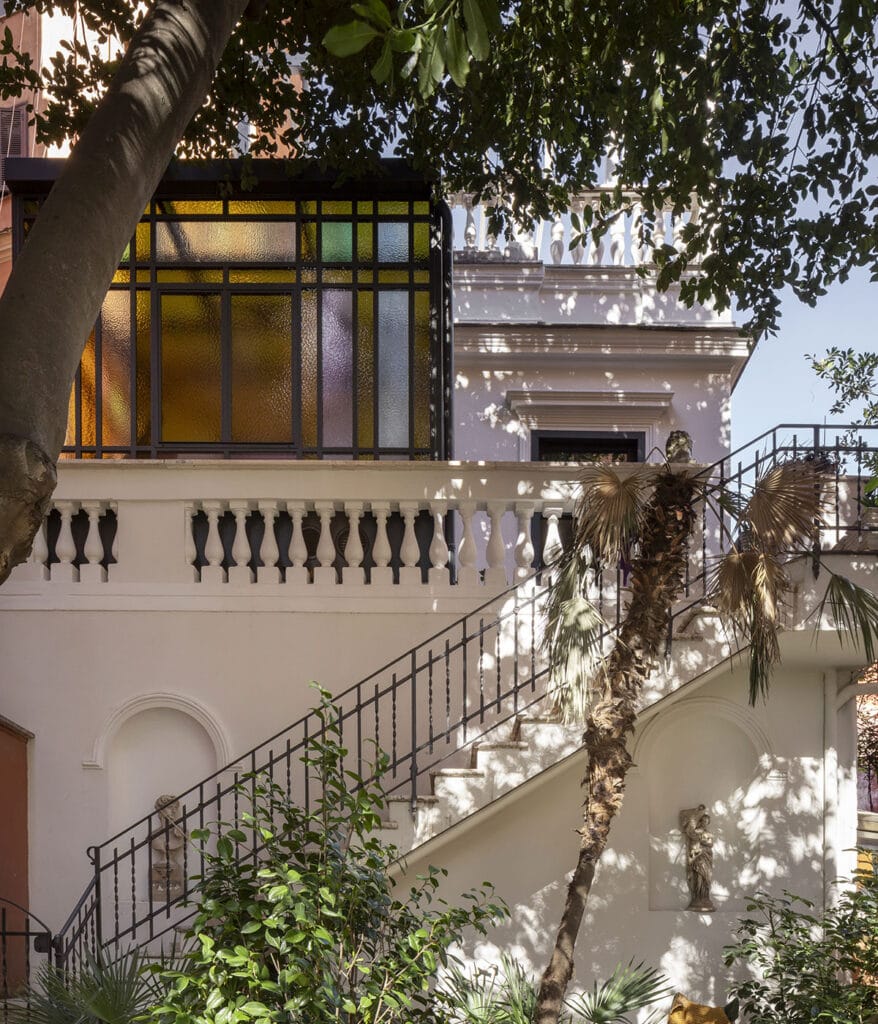
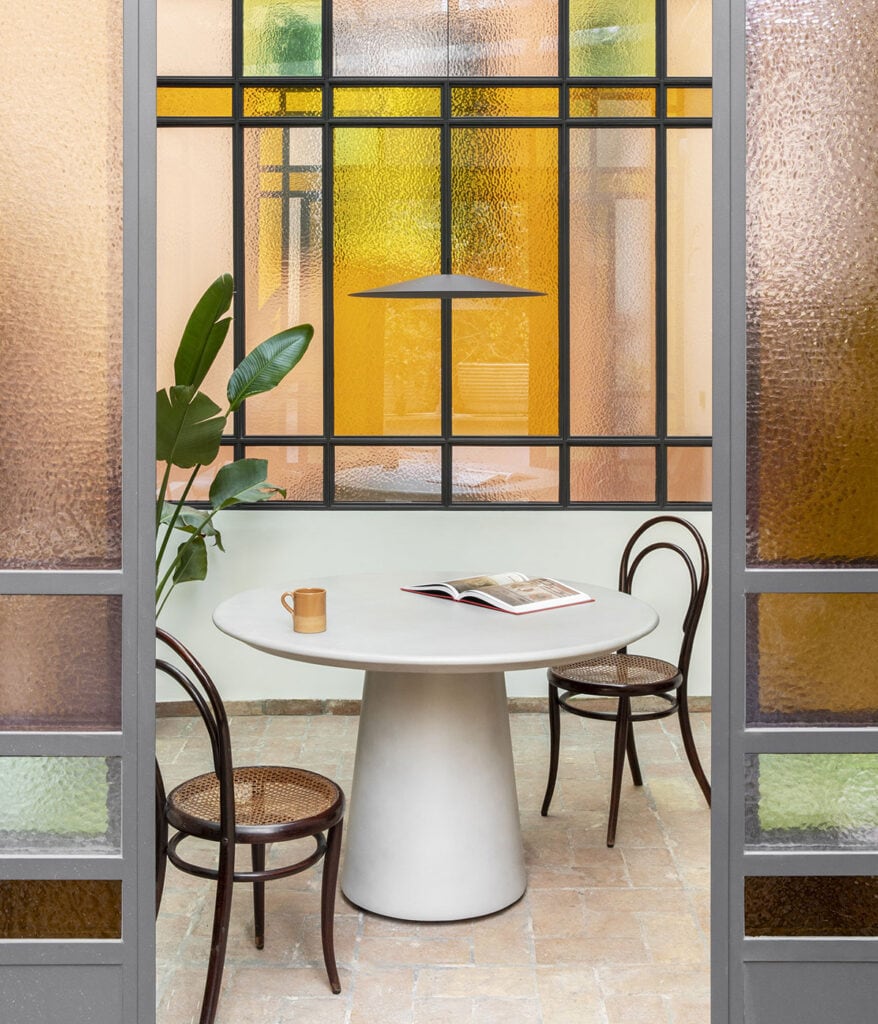
The intervention is driven by a careful process of subtraction and by the preservation of the home’s most distinctive features. The street-facing veranda, characterized by cathedral glass in soft green, pink, and yellow tones, is restored respecting its original rhythm and colors, while rebuilt with a new steel frame and solar-control glass. By removing the former separation between veranda and interior, the living space expands and becomes permeated by shifting natural light throughout the day.
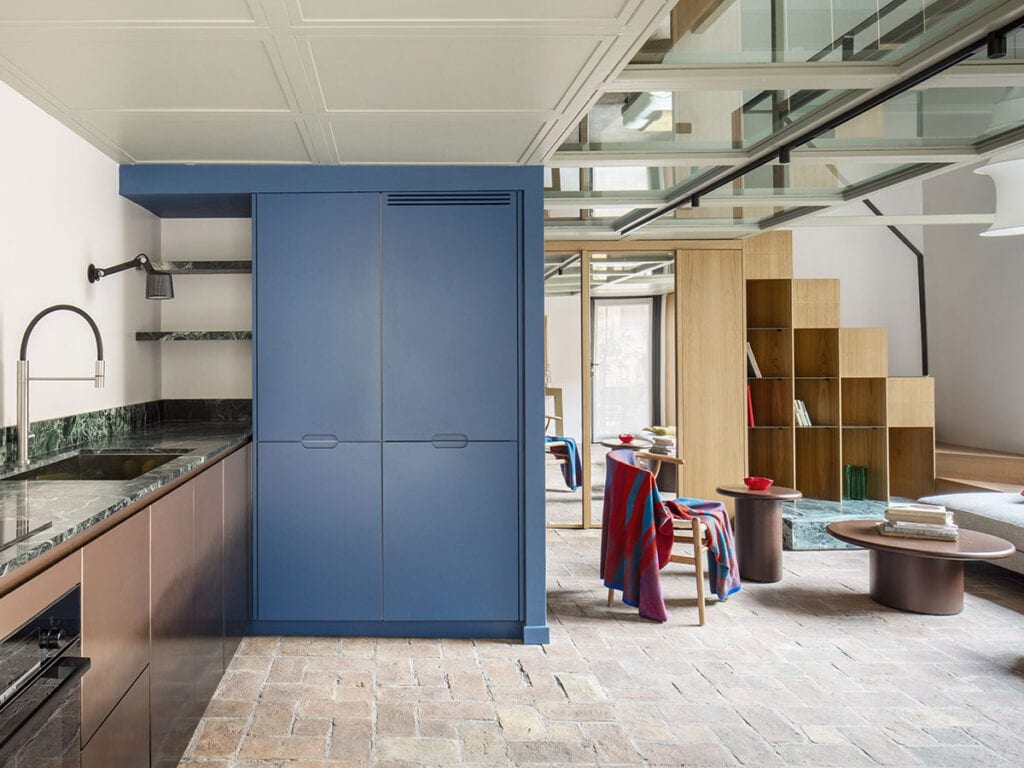
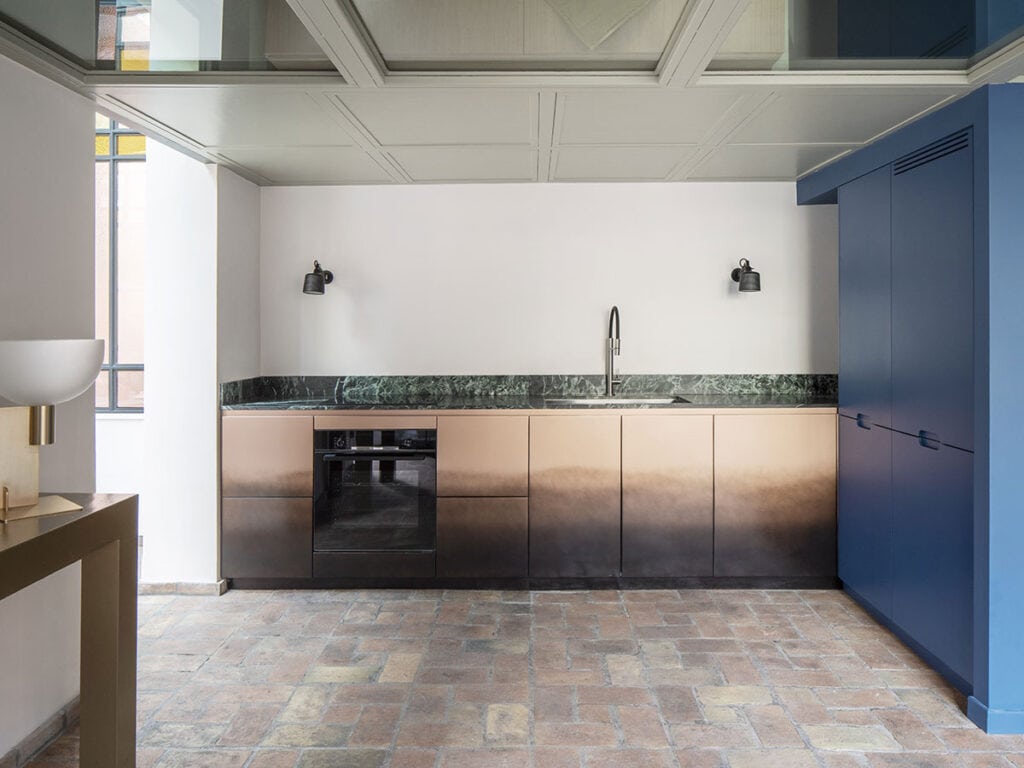


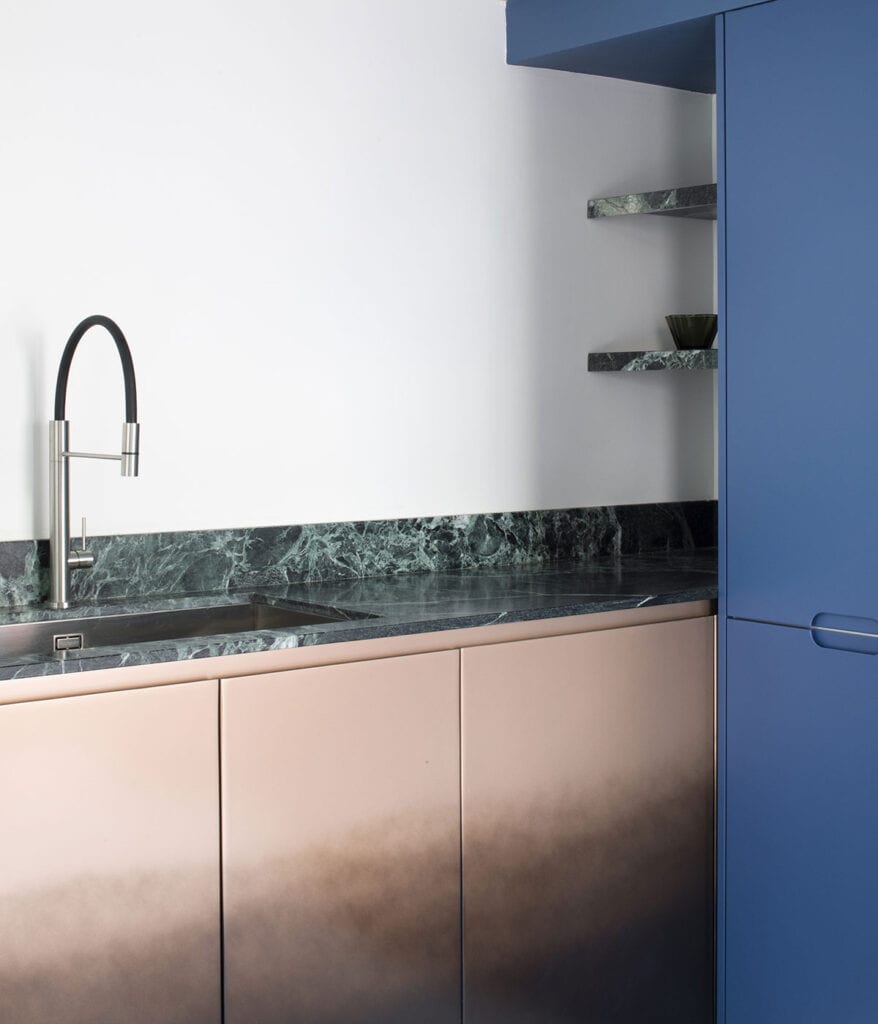
Inside, the layout is radically reorganized to overcome the previous fragmentation. The kitchen is relocated beside the veranda and conceived as a linear, essential volume topped with Verde Alpi marble and free from overhead cabinets. In this space, QuadroDesign’s 398 mixer from the Cucina Inox series, in AISI316L stainless steel, is selected as a functional and material counterpoint to the project’s palette, which fades from black to terracotta and dialogues with the preserved original terracotta floors.
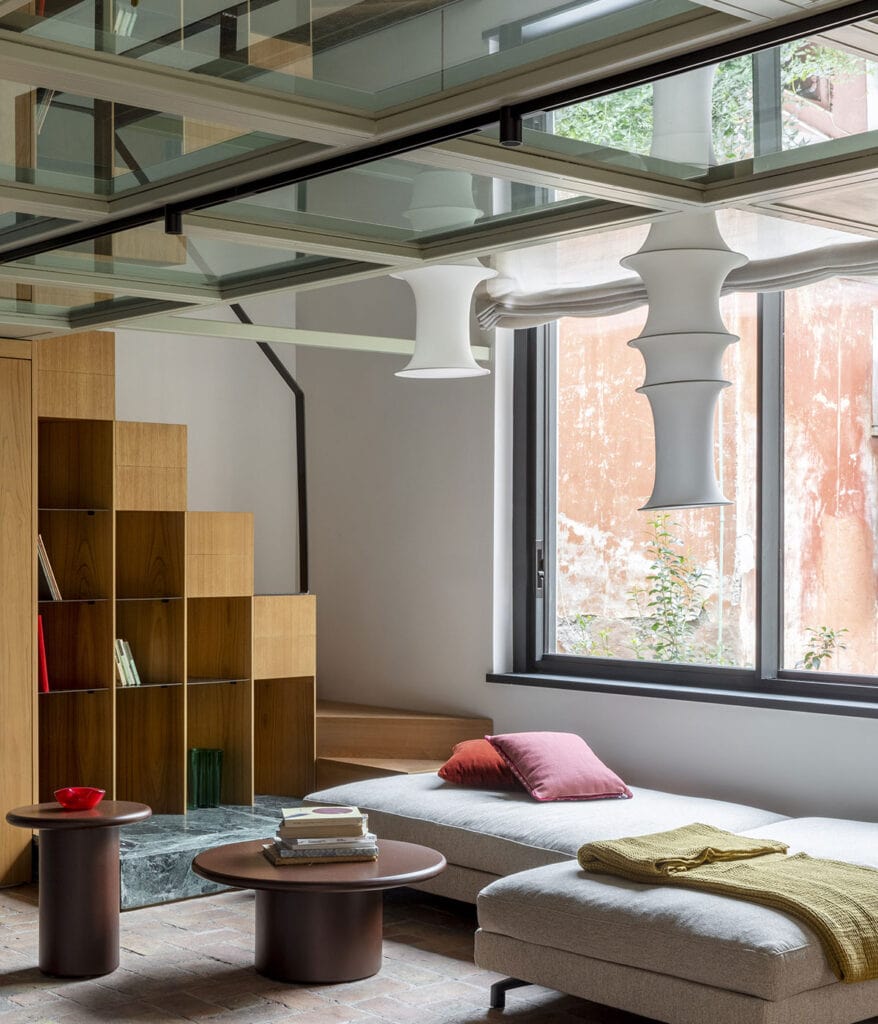
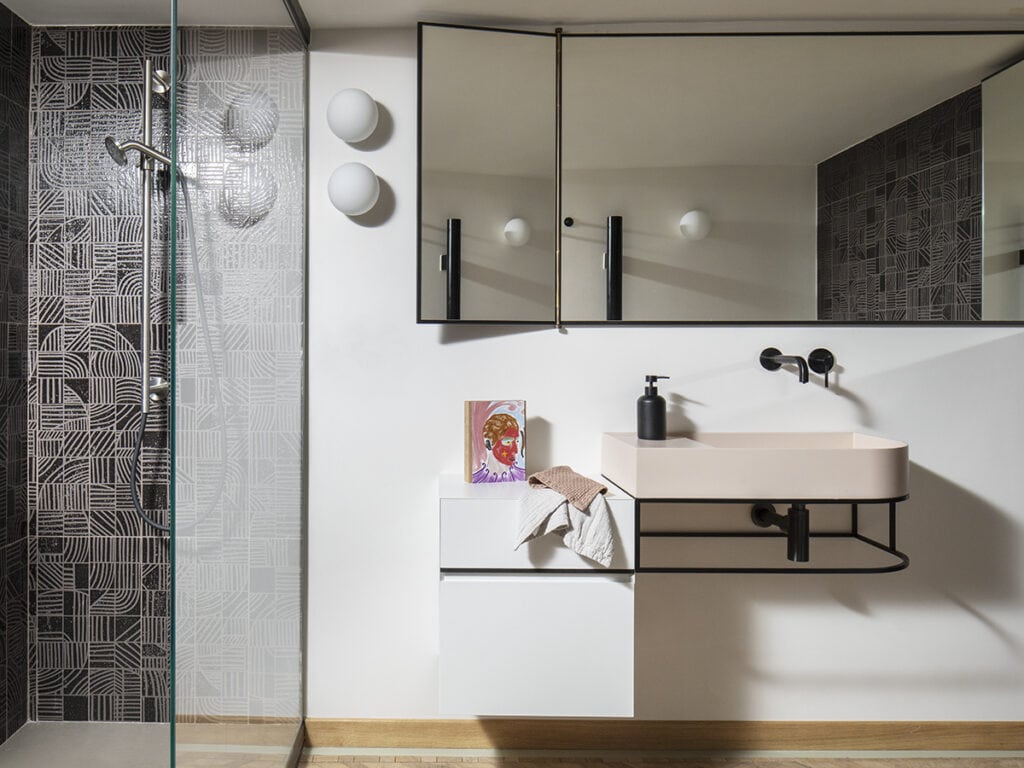
A new alternating-tread staircase in chestnut wood becomes the project’s architectural centerpiece. Its first step, clad in Verde Alpi marble, forms the sculptural base of a custom bookshelf integrated into the under-stair volume. A deep blue block organizes the ground-floor services and continues upward through the mezzanine, defining the main bathroom on the top level. Here, FFQT fixtures designed by Formafantasma for QuadroDesign are installed, in some cases specified in black PVD finish, reinforcing the project’s graphic and material intensity.
The partial opening of the mezzanine introduces a double-height void that enhances spatial depth and visual connections between levels. Glass floor panels and mirrored surfaces multiply reflections, amplifying light and the perception of verticality. Foret parquet floors and custom-made furnishings establish continuity between living and sleeping areas, while a second spiral staircase in raw iron with cherry-wood treads connects the bedroom to the studio, acting as a sculptural focal element.
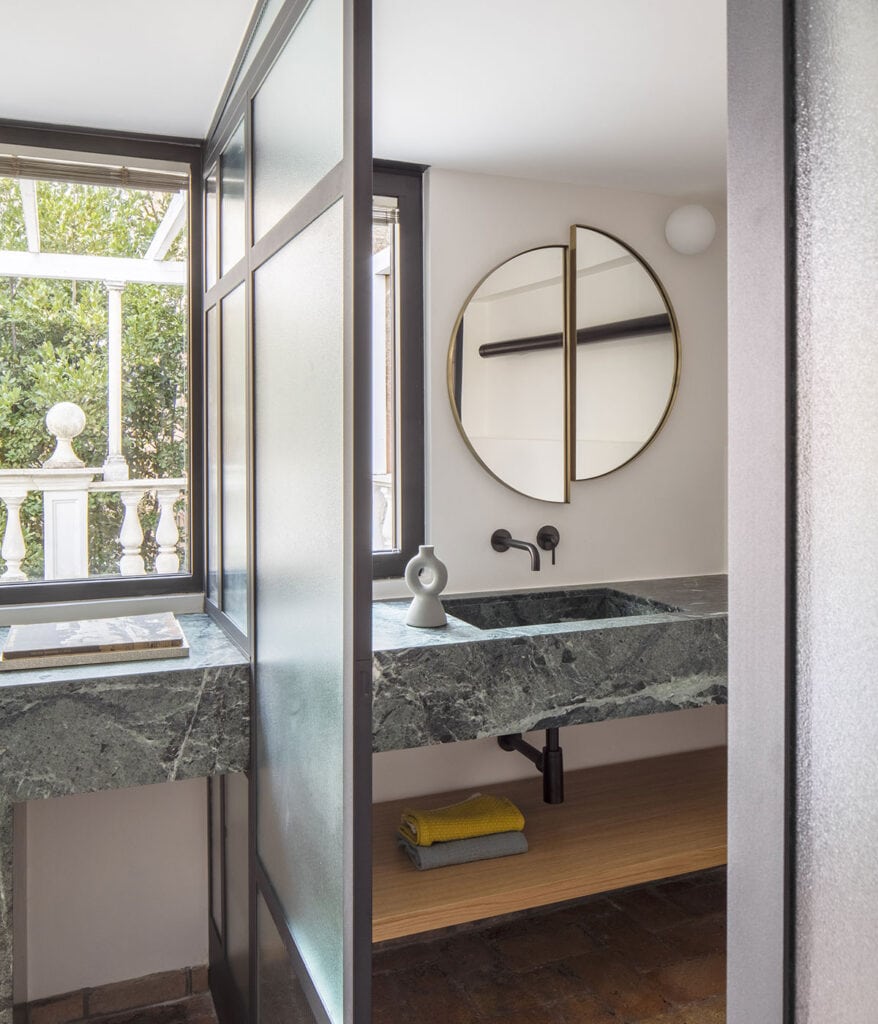
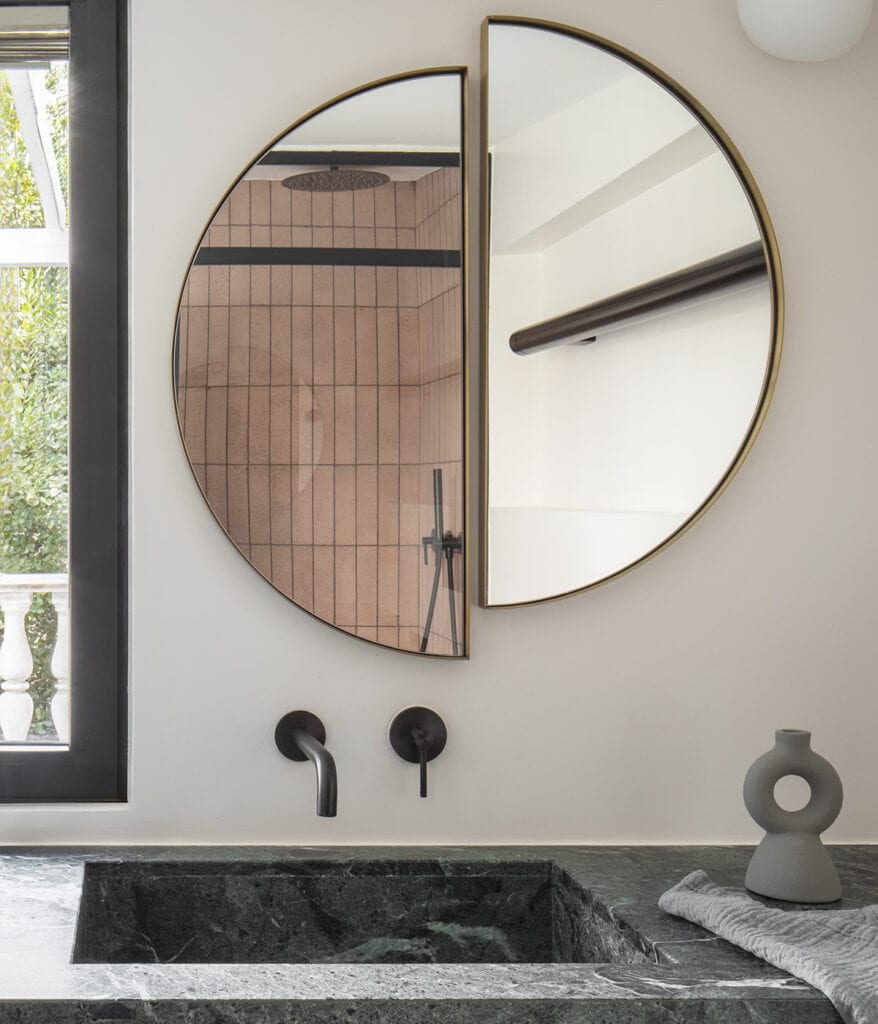
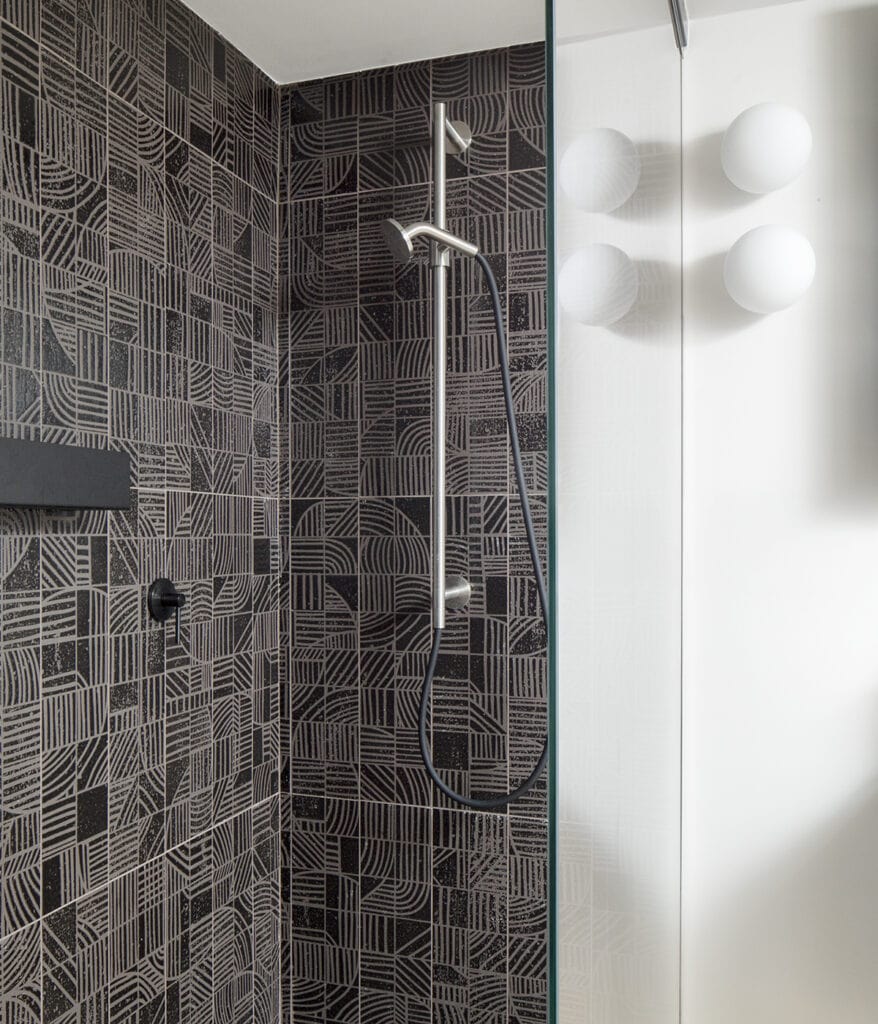
Discreetly embedded within one of Rome’s most characterful neighborhoods, the project reveals the latent potential of a neglected building through a restrained yet expressive architectural language. A balance between memory and contemporary sensibility shapes a domestic landscape where materials, light, and essential forms define a quiet, precise, and enduring urban refuge.